

Dental Bone Grafts: A Patient’s Guide to Procedure, Costs & Healing
Quick Answer
Dental bone grafts: Hearing that you need a dental bone graft might sound a little intimidating, but there is no need to worry. In modern dentistry, it is a highly routine and straightforward procedure designed to protect your oral health and prepare your smile for the future.
Whether you are preparing for a new tooth or protecting your jaw, here is everything you need to know about the process, costs, and recovery timeline.
What are Dental Bone Grafts?
Simply put, a bone graft is a safe, specialized material used to rebuild or strengthen bones that have weakened, shrunk, or been damaged.
If you lose a tooth or suffer from gum disease, the jawbone in that specific area can begin to dissolve because it no longer has a tooth root to support. To fix this, dentists use bone grafts.
You can think of a bone graft as a natural “scaffold” or framework. When this material is placed into an empty space in your jaw, it doesn’t just sit there. Instead, it acts as a supportive guide, encouraging your body’s own natural healing process. It signals your surrounding cells to grow new, healthy bone through and around the grafting material. Over several months, your body replaces the graft with your own strong, solid bone.
By using a bone graft, your dentist is essentially giving your body the gentle boost it needs to heal and rebuild itself.
If you want the full overview in one place, including healing stages, warning signs, graft particles, white material, sinus lift, and implant timing, start with our complete Dental Bone Graft Guide.
Dental Bone Grafts Procedure?
Your jawbone needs the stimulation of chewing to stay thick and healthy. When you lose a tooth, the bone in that empty space slowly begins to shrink. A dental bone graft procedure reverses this process.
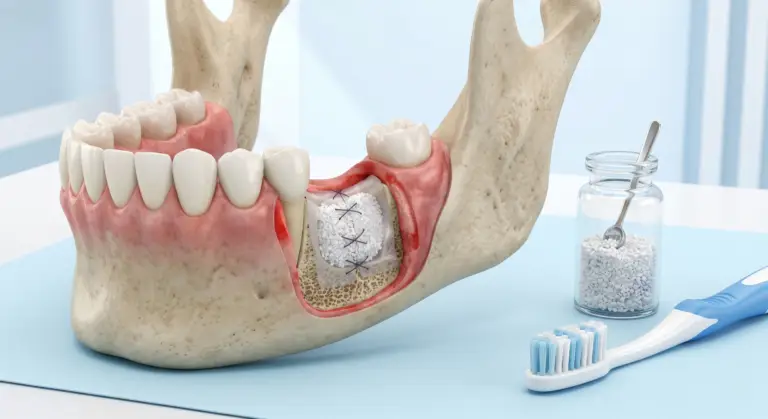
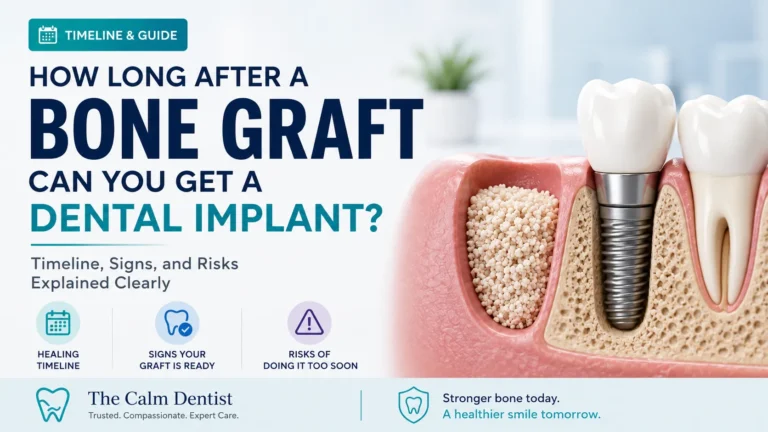
During your visit, your dentist will gently place bone grafting material into the area where the bone is thinning. Over time, your body uses this material as a scaffold to grow its own new, strong bone.
Why You Might Need Dental Bone Grafts for an Implant
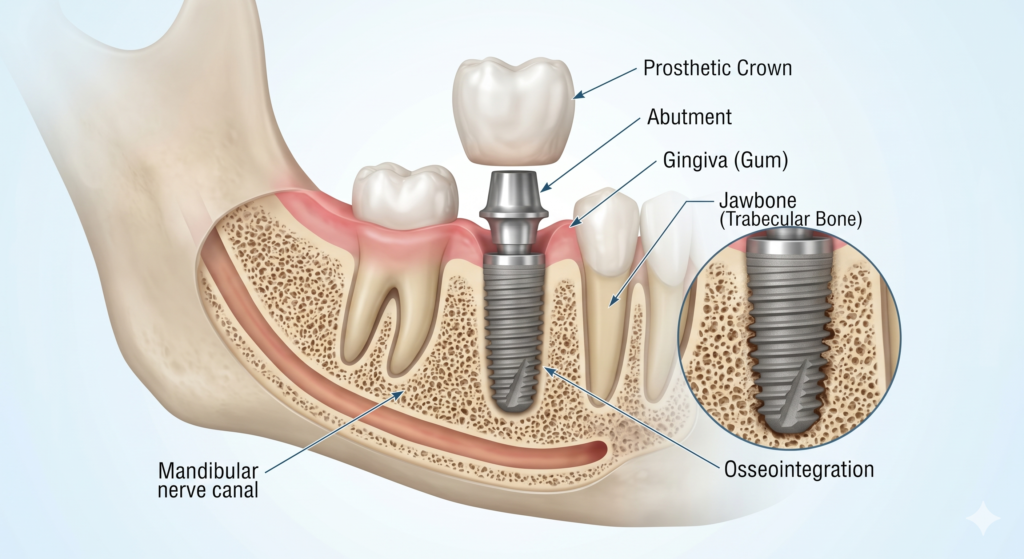
The most common reason patients need this procedure is to prepare for a dental implant.
A dental implant acts like an artificial tooth root and needs a sturdy foundation to anchor into. If your jawbone is too thin or soft, the implant will not stay in place. A bone graft provides the solid base necessary to ensure your implant lasts a lifetime.
To learn more about how implants work, you can read this helpful guide from MouthHealthy by the American Dental Association.)
What Are the Best Dental Bone Graft Materials?
You might be wondering where the grafting material comes from. Today, dentists have several safe, highly effective options. The “best” material depends on your specific needs, but common options include:
- Allografts: Bone material sourced from a certified human tissue bank. This is very common and highly safe.
- Xenografts: Bone material sourced from an animal (usually a cow).
- Synthetics: Artificial, biocompatible materials designed to mimic natural bone.
- Autografts: Bone taken from another part of your own body (like the back of your jaw).
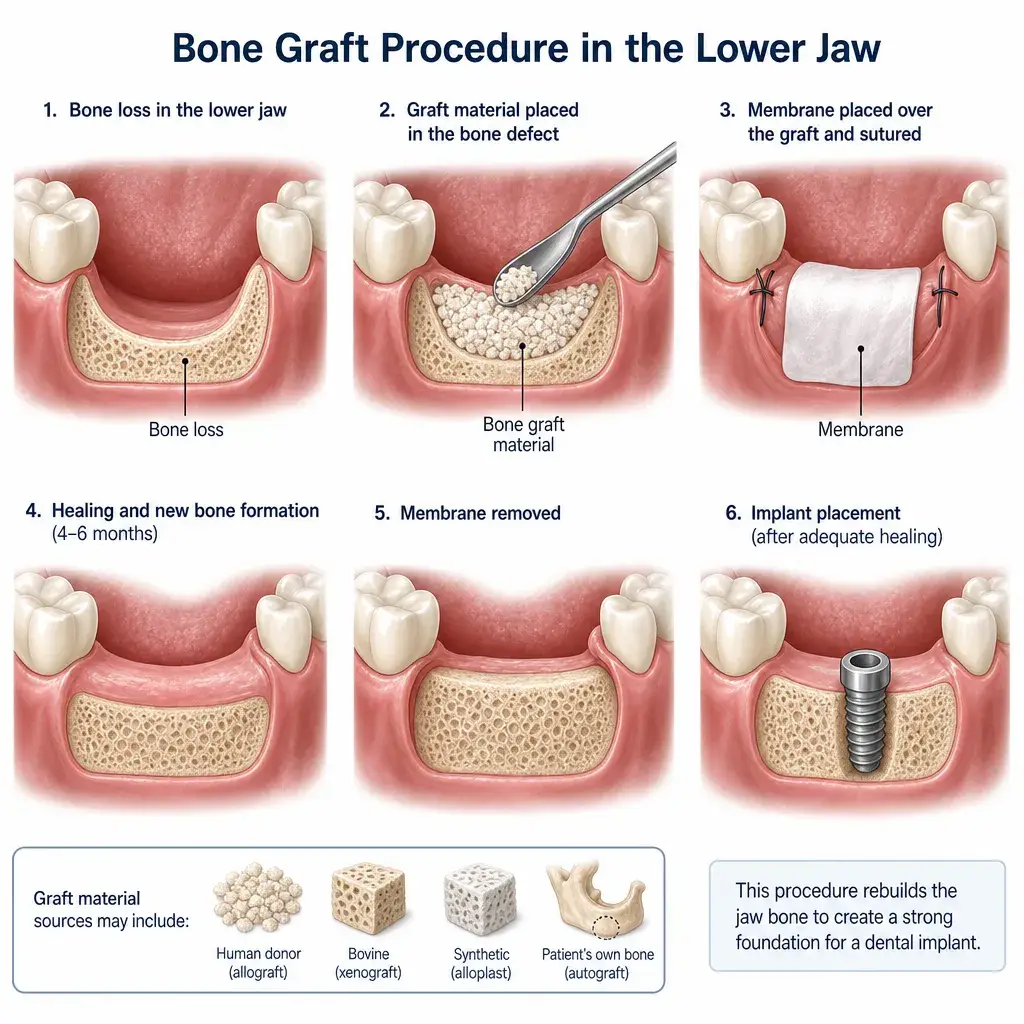
Your dentist will discuss these options with you to find the most comfortable and effective dental grafts material for you.
Dental Bone Grafts: Cost & Insurance Codes
We believe in complete transparency when it comes to your care. The cost of a dental bone graft can vary depending on the size of the graft and the materials used.
On average, a simple bone graft ranges from $200 to $1,000.
If you are using dental insurance, it helps to know the specific billing code. The most common dental bone graft code is D7953 (bone replacement graft for ridge preservation). We highly recommend checking with your insurance provider to see how much of this specific code they cover.
Dental Bone Graft Healing Stages: A Timeline
Understanding the healing process is the best way to ease post-procedure anxiety. Here is what you can expect in the days following your visit.
Day 1 to Day 3: Initial Recovery
During the first 72 hours, it is completely normal to experience some minor bleeding, mild pain, and swelling. Your dentist will prescribe or recommend pain relievers to keep you comfortable. Stick to soft foods, avoid using straws, and get plenty of rest.
Day 4 Dental Bone Grafts: Healing Stages
Many patients search for what happens on Day 4, as this is a turning point. By the fourth day, your swelling should reach its peak and begin to noticeably go down. Your pain should transition to a mild ache or disappear entirely. You can slowly start introducing slightly firmer (but still easy-to-chew) foods back into your diet.
You can get more detailed information regarding dental bone graft healing stages here
Helpful Vitamins for Dental Bone Graft Recovery
Nutrition plays a big role in how quickly you heal. To support bone growth and tissue repair, focus on foods rich in:
- Vitamin C: Helps heal your gums.
- Vitamin D & Calcium: Essential for building new bone. You can find great sources of bone-building vitamins in this nutritional guide by the Mayo Clinic.)

Dental Bone Graft Failure Signs: When to Call the Dentist
While complications are rare, it is important to listen to your body. Call your dentist immediately if you experience any of the following dental bone graft failure signs:
- A sudden, severe increase in pain after the first few days.
- Swelling that continues to get worse after day 4 or 5.
- A fever over 101°F.
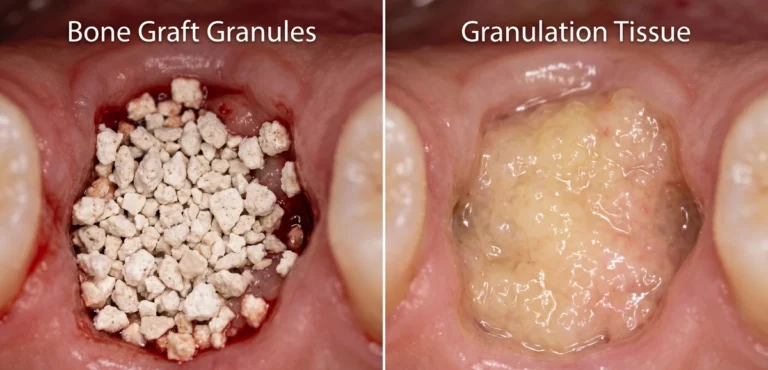
- Grafting material (which looks like white sand) falling out in large amounts (a few tiny granules falling out is normal).
Many patients complain that their dental bone graft is falling out after the surgery. This is a false alarm in most cases. If you’re worried about your bone graft becoming loose or white stuff appearing in the socket, here is a detailed guide for more information
Dental Bone Grafts: FAQ Section
How much does a dental bone graft typically cost? Typically, dental bone grafts costs between $200 and $1,000 without insurance. The exact price depends on the complexity of the procedure and the type of grafting material used.
Does a dental bone graft hurt? The procedure itself is done under local anesthesia, so you will not feel any pain while you are in the chair. Afterward, you can expect mild soreness for a few days, which is usually well-managed with over-the-counter pain medication.
How long does a dental bone graft take to heal? Your gums will heal in just a few weeks. However, the bone beneath the gums takes between 3 to 6 months to fully harden and integrate before it is ready for a dental implant.

Dr. Mehmood Asghar is a Dentist and an Assistant Professor of Dental Materials, with nearly a decade of clinical experience. He holds a Ph.D. in Dental Biomaterials from Universiti Malaya and a Bachelor of Dental Surgery (BDS) from NUST. As a dedicated researcher with over 25 peer-reviewed publications and more than 310 citations in international journals, Dr. Asghar bridges the gap between clinical dentistry and advanced biomaterials research to provide patients with evidence-based, practical dental advice.



4 Comments