
By Dr. Mehmood Asghar, BDS, MPhil, PhD
If your bite feels off after a filling or crown, it can be difficult to ignore. One tooth may feel too high. Chewing may feel uneven. You may feel like your teeth no longer meet the way they used to.
Sometimes this feeling is part of normal short-term adjustment after dental work. But sometimes it means the filling or crown is slightly high and needs a small correction.
This guide explains what may be happening, when to wait, when to call your dentist, and what not to do if your bite feels weird after a filling or crown.
If your bite feels off but you are not sure whether it is related to dental work, start with my broader guide: Why Does My Bite Feel Off? Causes, Dental Fixes, Anxiety, and Phantom Bite Syndrome.
Quick Answer: Is It Normal If My Bite Feels Off After a Filling or Crown?
A bite can feel slightly different after a new filling or crown because the tooth has been restored, polished, and brought back into function. Mild sensitivity or awareness may settle.
But if one tooth feels like it hits first, feels too tall, hurts when you bite, or makes chewing uncomfortable, the filling or crown may be high. In that case, you should contact your dentist for a bite check.
Cleveland Clinic explains that dentists check the bite after placing a filling, and pain when biting can happen if a new filling interferes with the bite. This can often be corrected by reshaping the filling. You can read their patient guide here: Cleveland Clinic: Dental Fillings.
Why Can a Bite Feel Off After a Filling?
A filling changes the shape of a tooth. Even when the filling is carefully placed, your mouth may notice tiny differences once the numbness wears off.
Your bite may feel off after a filling because:
- The filling is slightly high
- The tooth is temporarily sensitive
- The numbness made it hard to bite normally during the appointment
- Your jaw muscles were tense during treatment
- You are chewing differently to protect the tooth
- The tooth had deep decay or irritation before the filling
A slightly high filling can make one tooth touch before the others. That small early contact may feel very obvious because teeth are highly sensitive to pressure.
Why Can a Bite Feel Off After a Crown?
A crown covers and restores a damaged tooth. Because it replaces the outer shape of the tooth, it must fit your bite carefully.
Your bite may feel off after a crown because:
- The crown is slightly high
- The crown shape feels unfamiliar
- The temporary crown changed how you were chewing
- The gum or tooth is sore after treatment
- The tooth underneath is still settling
- The jaw muscles are tense after keeping your mouth open
Cleveland Clinic describes dental crowns as caps that restore damaged teeth and improve chewing function. You can read more here: Cleveland Clinic: Dental Crowns. (my.clevelandclinic.org.
What Does a High Filling Feel Like?
A high filling may feel like:
- One tooth touches before all the others
- Pain when biting down
- A sharp or sore feeling during chewing
- Pressure on one tooth
- A feeling that your teeth cannot close normally
- Jaw tiredness because you are avoiding that side
A high filling does not always cause constant pain. Sometimes it only hurts when you bite in a specific way.
What Does a High Crown Feel Like?
A high crown may feel similar to a high filling, but the sensation may be more obvious because a crown covers more tooth structure.
A high crown may cause:
- A tooth that feels too tall
- Difficulty chewing normally
- Soreness when biting
- A feeling that the crown hits first
- Jaw tension
- Sensitivity from repeated pressure
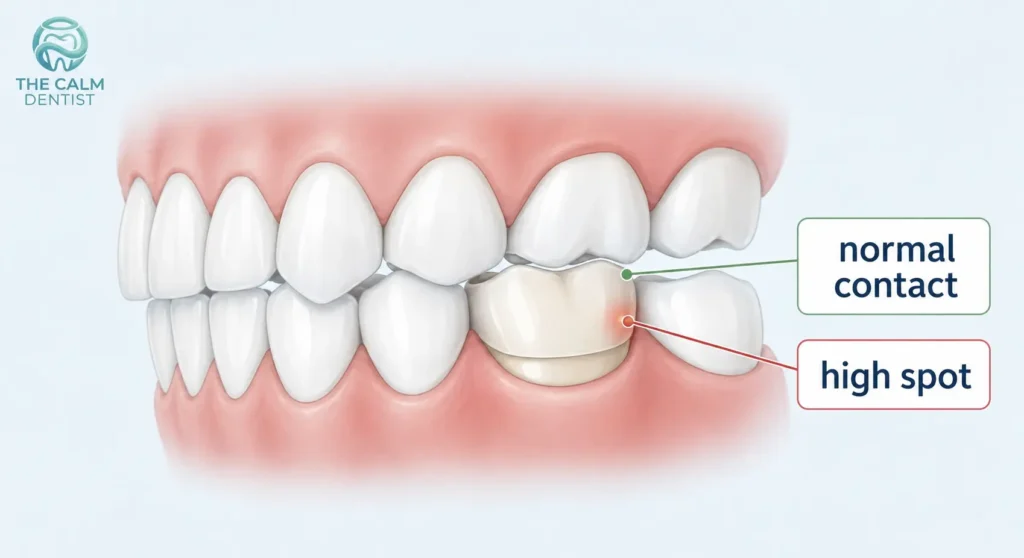
If a new crown feels high after the numbness wears off, do not keep forcing yourself to chew on it. Ask your dentist to check the bite.
Bite Feels Off vs Tooth Sensitivity: What Is the Difference?
| Symptom | More likely cause | What it feels like |
|---|---|---|
| Tooth hurts when biting down | Possible high filling or crown | Pressure or pain when teeth meet |
| Tooth reacts to cold | Tooth sensitivity | Short zing or sharp cold feeling |
| Tooth feels tall | Possible bite interference | One tooth hits first |
| Gum feels sore | Gum irritation from procedure | Tenderness around the tooth |
| Bite feels strange but not painful | Adjustment period or awareness | Tooth feels unfamiliar |
| Pain lingers after hot or cold | Possible nerve irritation | Deep ache that lasts |
Mild sensitivity after a filling can be temporary. Cleveland Clinic notes that minor sensitivity and gum soreness after a filling may happen and can settle within a week or two (my.clevelandclinic.org).
How Long Should You Wait Before Calling the Dentist?
If the tooth only feels mildly sensitive, you may be able to monitor it for a short time.
But you should call your dentist sooner if:
- The bite feels high
- One tooth hits before the others
- You have pain when biting
- You cannot chew comfortably
- The pain is getting worse
- The crown or filling feels rough or sharp
- You are avoiding one side of your mouth
A high bite usually does not need weeks of waiting. If the restoration is interfering with your bite, your dentist may need to adjust it.
Can a High Filling or Crown Damage the Tooth?
A high filling or crown can place extra pressure on one tooth. Over time, that may irritate the tooth, ligament, jaw muscles, or surrounding tissues.
Possible problems include:
- Tooth soreness
- Pain when chewing
- Increased sensitivity
- Jaw muscle discomfort
- Headache or facial tension
- Difficulty chewing normally
This does not mean you should panic. It means you should get the bite checked if the tooth feels too high or painful.
What Will the Dentist Do to Fix the Bite?
Your dentist may:
- Ask where the bite feels high
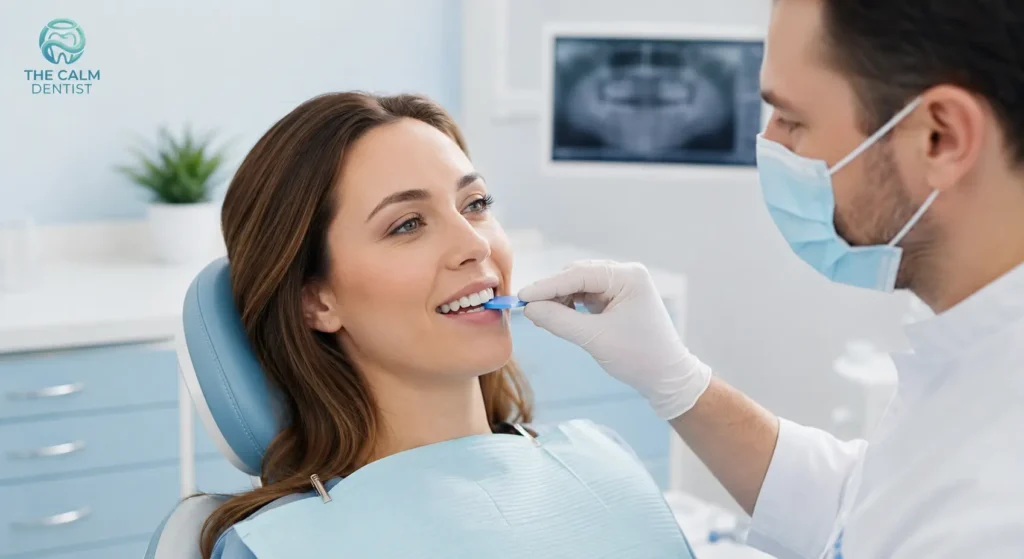
- Check your bite with articulating paper
- Look for heavy contact marks
- Adjust the filling or crown carefully
- Polish the surface
- Ask you to bite again and compare the feeling
This is usually a small correction. Do not try to “wear it down” yourself by chewing hard foods. That can make the tooth more sore.
What If the Dentist Says the Bite Looks Fine?
Sometimes the bite looks acceptable, but the tooth still feels strange. This can happen when:
- The tooth is sensitive
- The jaw muscles are tense
- You are clenching
- The bite feels unfamiliar after treatment
- You are closely monitoring every tooth contact
- The original tooth problem irritated the nerve
If your dentist has checked the bite carefully and says it looks fine, the next step is not always repeated adjustment.
Read this related guide: Why Does My Bite Feel Wrong Even After the Dentist Says It Is Fine?
Can Anxiety Make the Bite Feel Worse After Dental Work?
Yes. After dental treatment, some patients become highly aware of how their teeth touch. You may start checking the bite again and again. You may tap your teeth together, compare both sides, or search online for reassurance.
This can make the bite feel louder and more uncomfortable.
Dental anxiety does not mean the feeling is fake. It means your nervous system may be paying extra attention to tooth contact.
If this sounds familiar, read: Can Dental Anxiety Make Your Bite Feel Wrong?
Could Clenching or Grinding Be Involved?
Yes. Clenching and grinding can make teeth sore and can make the bite feel uneven, especially after dental work.
Mayo Clinic lists tooth pain or sensitivity, jaw soreness, headaches, and worn teeth among possible signs of bruxism. You can read more here: Mayo Clinic: Bruxism. (mayoclinic.org).
If you notice your teeth touching during the day, try this resting position:
Lips together, teeth apart, tongue relaxed.
What Should You Avoid If Your Bite Feels Off?
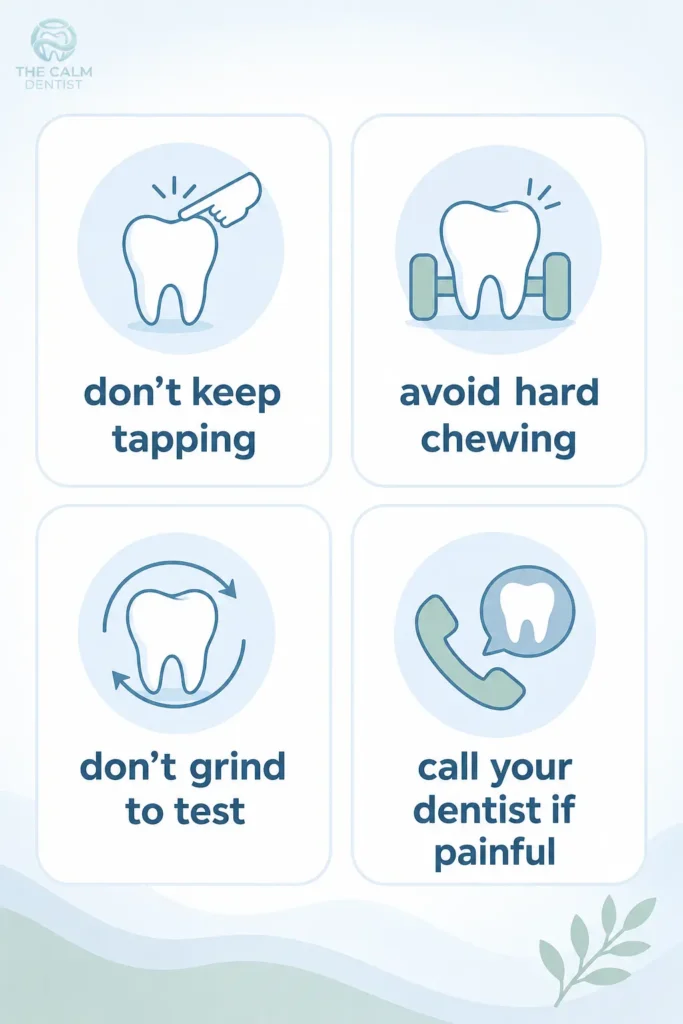
Avoid:
- Repeatedly tapping your teeth together
- Grinding your teeth to “test” the bite
- Chewing hard foods to wear the filling down
- Pressing the tooth with your tongue all day
- Ignoring clear pain when biting
- Asking for repeated adjustments without a clear finding
One careful adjustment can help if there is a real high spot. But repeated adjustments without a clear diagnosis can sometimes make bite awareness worse.
When Should You Go Back to the Dentist?
Go back to your dentist if:
- Your bite feels high after a filling or crown
- You feel one tooth hitting first
- You have pain when biting
- You cannot chew normally
- The tooth is getting more sensitive
- The crown or filling feels sharp, rough, or bulky
- Symptoms are not improving
When you contact the dental office, be specific:
“Since the filling/crown, this tooth feels like it hits first when I close. It hurts when I chew on that side.”
That description is more useful than simply saying, “My bite feels weird.”
FAQs
Is it normal for my bite to feel off after a filling?
A mild change in feeling can happen after a filling, especially once the numbness wears off. But if one tooth feels high or painful when biting, your dentist should check it.
How do I know if my filling is too high?
A high filling often feels like one tooth touches before the others. It may cause pain or pressure when biting down.
Can a crown make my bite feel off?
Yes. A new crown can feel unfamiliar at first, but if it feels too tall, painful, or difficult to chew with, it may need adjustment.
How long should I wait if my bite feels weird after a filling?
If it is mild sensitivity, it may settle. If the bite feels high or painful when chewing, call your dentist rather than waiting for weeks.
Can a high filling cause tooth pain?
Yes. A high filling can place extra pressure on the tooth and cause pain when biting.
Can a high crown damage my tooth?
A high crown can overload the tooth and irritate the surrounding tissues. If it feels high, get it checked.
Will a high filling fix itself?
A truly high filling usually needs adjustment. Do not try to wear it down by chewing hard foods.
What does a dentist do if the bite is too high?
The dentist checks the bite, identifies heavy contact areas, reshapes the restoration slightly, and polishes it.
Why does my bite still feel wrong after adjustment?
The tooth may still be sensitive, the jaw muscles may be tense, or you may be very aware of tooth contact. If the bite has been checked several times, repeated adjustment may not always be the answer.
Can anxiety make my bite feel worse after dental work?
Yes. Anxiety and repeated checking can make tooth contact feel more noticeable. This can happen even when the dental work is acceptable.
Final Thoughts
If your bite feels off after a filling or crown, start with the practical explanation first. A slightly high filling or crown is common and can often be corrected with a small adjustment.
But if the bite has been checked carefully and still feels wrong, the issue may involve sensitivity, jaw tension, clenching, anxiety, or bite awareness.
The safest approach is simple: get clear bite pain checked, avoid constant testing, and do not chase repeated adjustments unless your dentist can identify a clear reason.
Medical Disclaimer: This article is for general educational purposes only and is not a substitute for diagnosis or treatment from your own dentist, physician, or qualified healthcare professional. If you have severe pain, swelling, fever, trauma, pus, difficulty opening your mouth, or symptoms that are getting worse, seek professional care promptly.

Dr. Mehmood Asghar is a Dentist and an Assistant Professor of Dental Materials, with nearly a decade of clinical experience. He holds a Ph.D. in Dental Biomaterials from Universiti Malaya and a Bachelor of Dental Surgery (BDS) from NUST. As a dedicated researcher with over 25 peer-reviewed publications and more than 310 citations in international journals, Dr. Asghar bridges the gap between clinical dentistry and advanced biomaterials research to provide patients with evidence-based, practical dental advice.