Quick Answer
White tissue around a dental implant may occur during early soft-tissue healing or may be surface debris near the surgical site. Color alone cannot diagnose an infection. Contact your dentist or surgeon if the area is becoming more painful, swollen, red, foul-smelling, draining fluid or pus, bleeding easily, or if the implant feels loose.
This guide is specifically about tissue or material immediately around a dental implant or healing cap. If the white area is elsewhere on your gums and is not associated with an implant, see our guide to white spots on gums.
On this page: Possible causes · Symptoms and next steps · When to call your dentist · What your dentist checks
What Can White Tissue Around a Dental Implant Be?
Dental implant treatment can involve more than one stage. The implant may be below the gum while it bonds with the jawbone, or a healing cap or abutment may be visible through the gum. As a result, what looks normal can differ between patients and treatment stages.
The American Academy of Periodontology explains that some treatment plans include uncovering the implant and attaching a temporary healing cap, followed by a short period of gum healing.
White Tissue Around an Implant: Symptoms and Next Steps
| What you notice around the implant | What it may mean | Sensible next step |
|---|---|---|
| A pale or white healing surface soon after surgery, while discomfort is gradually settling | It may be part of normal soft-tissue healing. Color alone cannot confirm the cause. | Follow your dentist’s aftercare instructions and avoid touching or scraping the area. |
| A small amount of material that looks like residue or trapped debris, without worsening symptoms | It may be surface debris near the surgical site. | Clean only as your dentist has instructed. Contact the clinic if you are unsure what you are seeing. |
| White tissue or material with increasing pain, swelling, redness, bad taste, bad smell, or discharge | The area needs a dental assessment; these accompanying changes are more important than color alone. | Contact your dentist or surgeon promptly for advice. |
| A loose implant, significant bleeding, fever, severe facial swelling, or difficulty swallowing or breathing | These symptoms need urgent professional attention. | Contact your dental team urgently or seek emergency medical care where appropriate. |
Early Healing Tissue After Implant Surgery
Soon after implant surgery, the surgical site may look pale, whitish, yellowish-white, or covered by a light film. Soft tissue can have an unfamiliar appearance while the body repairs the area, especially where sutures or a healing cap are present.
This does not automatically mean that something is wrong. It also does not confirm that the implant is fully healed or ready for normal chewing. Deeper healing around the implant cannot be judged from gum color alone.
Surface Debris or Residue Near the Implant Site
Sometimes what appears white may be food debris, plaque, or residue from a product that your dentist has advised you to use. Avoid trying to scrape, pull, or forcefully brush it away. Repeated touching can irritate healing tissue and make the area more difficult to assess.
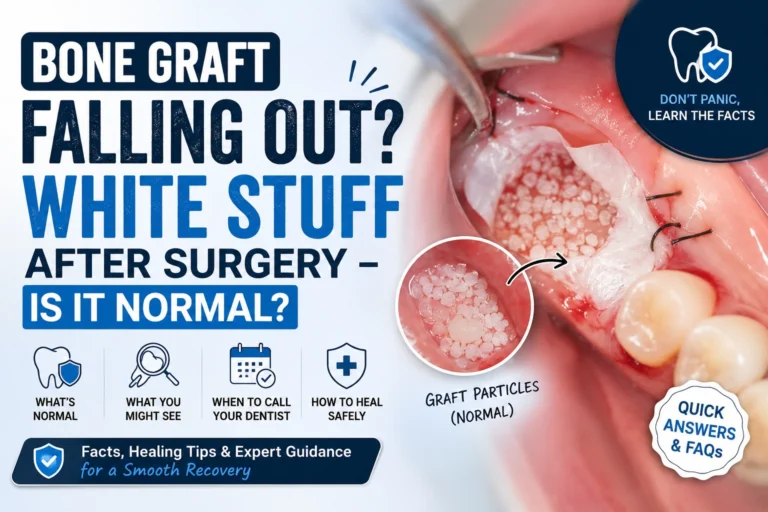
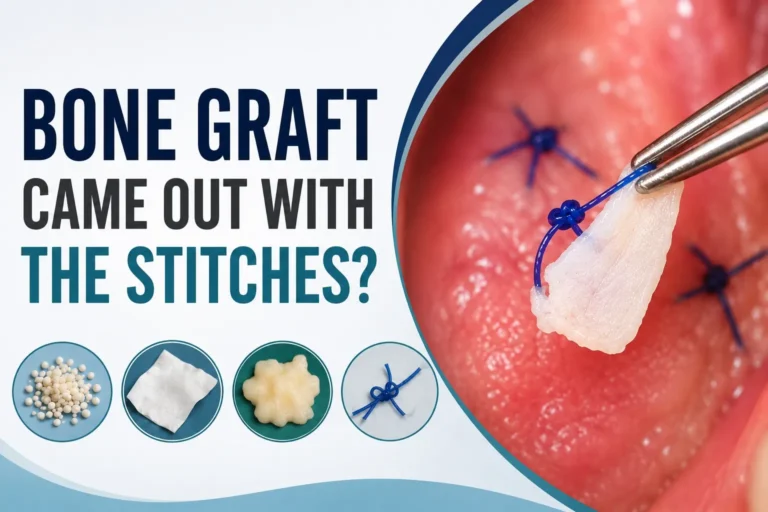
If you recently had bone grafting and the white material is from the grafted socket rather than around the implant, see Dental Bone Graft Falling Out: Is White Stuff After Surgery Normal?.
When to Contact Your Dentist About White Tissue Around an Implant
The most useful question is not simply “Is it white?” It is whether the area is changing, worsening, or accompanied by other symptoms.
Arrange a review with your dentist or surgeon if you notice:
- Pain that is increasing rather than settling
- Increasing swelling, redness, or tenderness
- Pus, persistent discharge, or a foul taste or smell
- New or persistent bleeding
- Tissue that appears increasingly inflamed
- A loose, mobile, or wobbly implant
- Fever or swollen glands in the neck alongside mouth symptoms
The Cleveland Clinic lists a loose implant, bleeding or swollen gums, fever, and pus around an implant among reasons to contact a dental professional.
Seek urgent dental or medical care if you have severe facial swelling, difficulty swallowing or breathing, heavy bleeding, or feel seriously unwell.

Why White Tissue Alone Cannot Diagnose Infection
White tissue by itself does not confirm an infection. Inflammation or infection around an implant may involve other changes, such as tenderness, bleeding, swelling, or discharge. A dentist must assess the implant and surrounding tissues rather than relying on a photograph or color description alone.
The American Academy of Periodontology explains that peri-implant diseases affect the tissues around implants and may involve inflammation of the gums and, in some cases, deterioration of supporting bone.
Do not use leftover antibiotics, harsh mouthwashes, or online remedies to treat a suspected implant problem. The correct next step is to contact the dentist responsible for your implant care.
What Your Dentist May Check
At a review appointment, your dentist or specialist may assess:
- The gum tissue around the implant
- Pain, swelling, bleeding, or discharge
- The implant, healing cap, abutment, or crown
- Plaque control around the area
- Whether an X-ray or other imaging is appropriate
- Your treatment stage and relevant health history
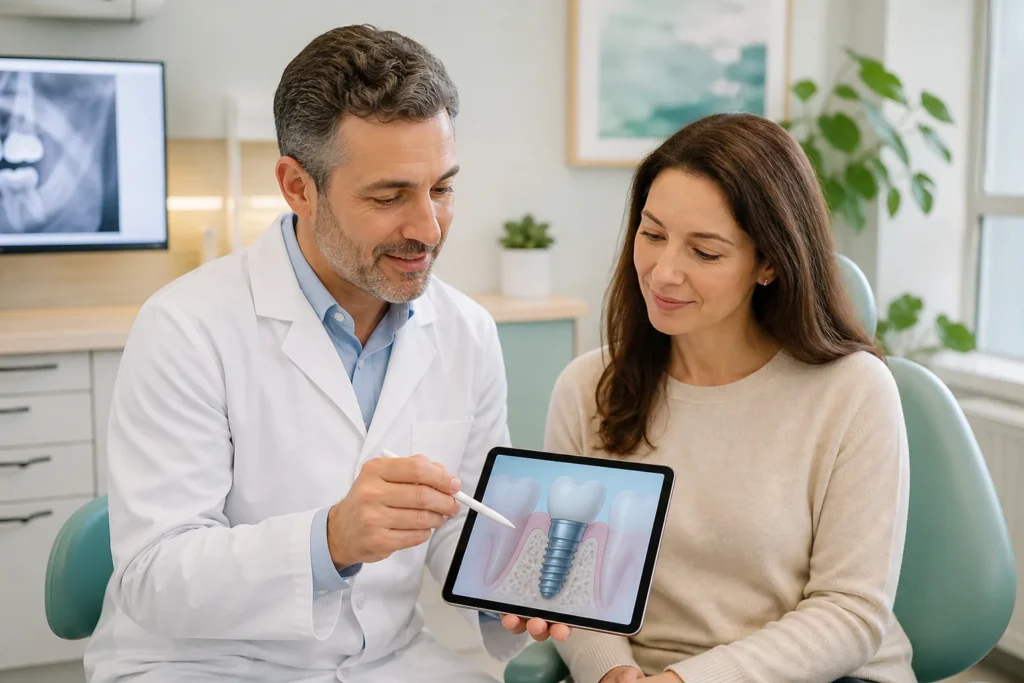
Two areas can look similar in a mirror but require different advice. Your dentist can assess the implant components and supporting tissues, not just the visible surface.
Avoid Repeatedly Touching or Self-Treating the Area
It is understandable to inspect a new implant closely, particularly if you are anxious about healing. However, repeatedly touching, pressing, scraping, or pulling the lip or cheek back to check the area may irritate the gums.
Instead:
- Follow your own dentist’s aftercare instructions
- Use only products recommended for your specific treatment
- Keep scheduled follow-up appointments
- Take one clear photograph only if your clinic asks for one
- Contact the clinic if you are unsure what you are seeing
Frequently Asked Questions
Is white tissue around a dental implant normal?
It may occur during early soft-tissue healing, but color alone cannot confirm that healing is normal. Contact your dentist or surgeon if the area is worsening or is associated with increasing pain, swelling, discharge, bad taste, fever, bleeding, or looseness.
Can gums heal over a dental implant?
Depending on the stage of treatment, an implant may be covered by gum tissue during healing or may have a healing cap visible through the gum. Your dentist can explain which appearance is expected in your individual case.
Should I remove white material around my implant?
Do not scrape, pick, or forcefully clean the area unless your treating dentist has told you exactly how to care for it. Contact the clinic if you are unsure whether you are seeing healing tissue or surface debris.
When should I call my dentist urgently?
Call promptly if you have worsening pain or swelling, pus or persistent discharge, fever, significant bleeding, a loose implant, or symptoms that are worsening instead of improving. Seek urgent care for breathing or swallowing difficulty or severe facial swelling.
Medical Disclaimer
This article is for general educational purposes only and does not replace personalized advice, diagnosis, or treatment from your dentist, oral surgeon, or physician. Your treating dental surgeon is best placed to assess your implant and surgical site.
Dr. Mehmood Asghar is a Dentist and an Assistant Professor of Dental Materials, with nearly a decade of clinical experience. He holds a Ph.D. in Dental Biomaterials from Universiti Malaya and a Bachelor of Dental Surgery (BDS) from NUST. As a dedicated researcher with over 25 peer-reviewed publications and more than 310 citations in international journals, Dr. Asghar bridges the gap between clinical dentistry and advanced biomaterials research to provide patients with evidence-based, practical dental advice.
Discover more from The Calm Dentist Blog
Subscribe to get the latest posts sent to your email.