
Dental Bone Graft Guide: Procedure, Types, Healing, Risks & Cost
Written and clinically reviewed by Dr. Mehmood Asghar, BDS, MPhil, PhD. Last reviewed: August 2, 2026. See our editorial standards.
Quick Answer
A dental bone graft is a procedure that rebuilds or preserves the jawbone when there isn’t enough healthy bone to support your teeth, maintain the natural shape of your jaw, or prepare for future dental treatment such as implants. During the procedure, bone graft material is placed into an area of bone loss, where it acts as a framework that encourages your body to regenerate new bone over time.
Dental bone grafting is commonly used after tooth extraction, before dental implant placement, or to restore bone lost through gum disease, trauma, or other conditions. The American Association of Oral and Maxillofacial Surgeons explains that graft material can replace missing bone or provide a scaffold on which the patient’s own bone grows.
This guide explains everything you need to know about dental bone grafts, including when they’re needed, the different types of grafts and materials, what happens during the procedure, healing and recovery, success rates, risks, costs, and answers to frequently asked questions. If you’ve already had a bone graft and have questions about recovery, you’ll also find links to our detailed guides covering healing timelines, bone graft particles, infection, and dental implant timing.
Choose the Guide You Need
- Healing stages from day 1 to month 6
- White particles, exposed membrane, or graft material coming out
- What to do if graft material comes out with the stitches
- Normal healing versus infection warning signs
- When an implant may be placed after grafting
- Sinus lift pain, anesthesia, and recovery
What Is a Dental Bone Graft?
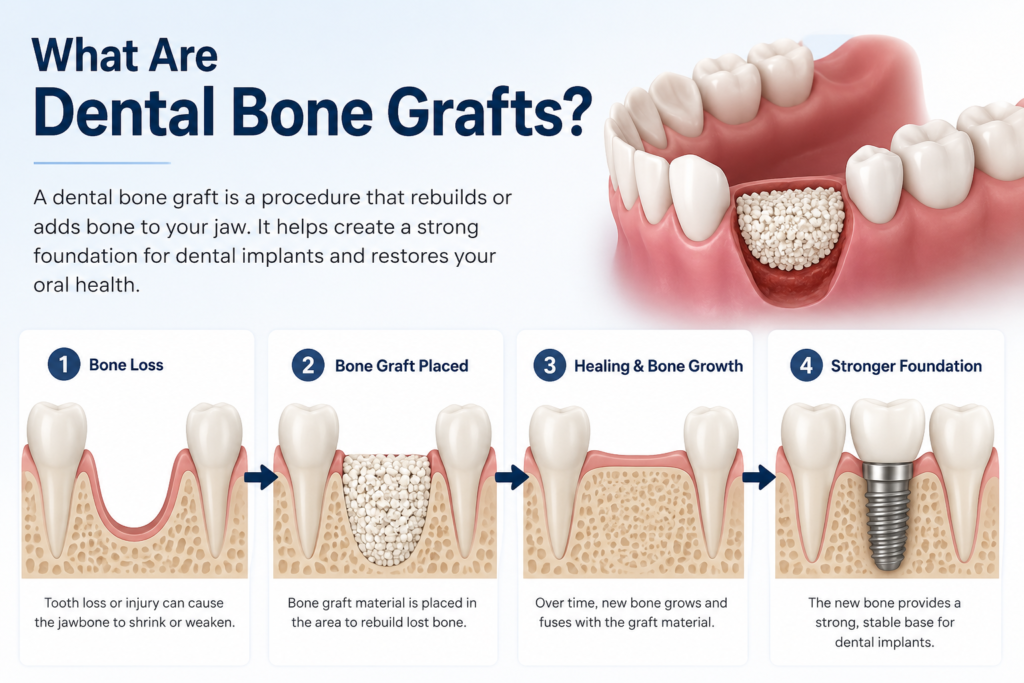
A dental bone graft is a surgical procedure that rebuilds or preserves the jawbone when there is not enough healthy bone to support long-term oral health or planned dental treatment. During the procedure, your dentist or oral surgeon places bone graft material into an area where bone has been lost or is expected to shrink. This material serves as a framework that encourages your body’s natural healing process, allowing new bone to develop over time.
Bone grafting is a form of regenerative dentistry, meaning its goal is to help your body regenerate its own supporting bone rather than simply replacing what has been lost. Instead of acting as a permanent artificial substitute, the graft creates an environment where new blood vessels, bone-forming cells, and connective tissue can gradually rebuild the area. As healing progresses, the graft becomes integrated with the surrounding jawbone, creating a stronger foundation for future dental treatment.
Dental bone grafts are commonly performed after tooth extractions, before dental implant placement, and to repair bone damaged by periodontal disease, trauma, or other oral conditions. However, the procedure is not only used to prepare for implants. In many cases, grafting is recommended to preserve the natural shape of the jaw, reduce bone loss after tooth removal, or restore bone that has deteriorated over time.
How Does a Dental Bone Graft Work?
Healthy jawbone is constantly renewed through a natural process called bone remodeling, in which old bone is broken down and replaced with new bone. When a section of the jaw has insufficient bone, this process alone may not be enough to restore the lost volume. A bone graft provides the support needed for the body to regenerate bone more predictably.
After the graft material is placed, your body’s healing response begins almost immediately. New blood vessels grow into the area, bringing oxygen, nutrients, and specialized cells responsible for forming bone. These cells gradually build new bone around the graft material, strengthening the site over the following months. The result is a healthier, more stable jawbone capable of supporting surrounding teeth, future restorations, or dental implants when appropriate.
The amount of new bone that develops—and how long the process takes—depends on several factors, including the size and location of the graft, the type of graft material used, your overall health, and how well the surgical site heals. While the gums often recover relatively quickly, the underlying bone continues to mature long after the soft tissues have healed.
Who Needs a Dental Bone Graft?
A dental bone graft is recommended when the jawbone has lost enough volume or strength that it can no longer properly support teeth, dental implants, or the natural shape of the jaw. While many people associate bone grafts with dental implants, they are also used to preserve bone after tooth extraction, repair damage caused by gum disease or trauma, and rebuild areas affected by oral surgery.
Your dentist or oral surgeon determines whether a bone graft is necessary by evaluating your clinical examination, dental X-rays, or three-dimensional CBCT scans. The decision depends on the amount of remaining bone, the cause of the bone loss, and your long-term treatment goals.
Common Reasons You May Need a Dental Bone Graft
A dental bone graft is recommended when there isn’t enough healthy jawbone to support long-term oral health or planned dental treatment. This may happen after tooth loss, because of advanced gum disease, following trauma, or when preparing for certain restorative procedures.
Your dentist will determine whether a bone graft is needed based on a clinical examination and dental imaging, such as X-rays or a CBCT scan. The recommendation depends on the amount of remaining bone, its location, and your treatment goals.
Common Reasons You May Need a Dental Bone Graft
- After a tooth extraction: A bone graft may be placed immediately after an extraction to help preserve the jawbone and reduce natural bone loss during healing.
- Before dental implants: If there isn’t enough bone to securely support an implant, grafting may be recommended to rebuild the area before implant placement.
- Bone loss from gum disease: Advanced periodontal disease can damage the bone supporting your teeth. In some cases, bone grafting can help restore these areas.
- After trauma or oral surgery: Bone grafts may be used to repair jawbone damaged by facial injuries, severe infections, or the removal of cysts or tumors.
- To preserve jawbone volume: In some situations, grafting is performed to prevent future bone loss and maintain the natural shape of the jaw.
Does Everyone Need a Dental Bone Graft?
No. Many people heal normally after a tooth extraction or have enough healthy bone for dental implants without grafting. Whether you need a bone graft depends on factors such as the amount of remaining bone, the location of the missing tooth, your future treatment plans, and your overall oral health.
Your dentist or oral surgeon will recommend bone grafting only when it is likely to improve the long-term success of your treatment.
Types of Dental Bone Grafting Procedures
Dental bone grafting isn’t a single procedure. The technique your dentist recommends depends on where bone has been lost, how much bone needs to be rebuilt, and your treatment goals. Some procedures preserve bone immediately after tooth extraction, while others rebuild areas that have already lost significant bone.
The most common types of dental bone grafting include:
- Socket preservation: Performed immediately after a tooth extraction to help preserve the shape and volume of the jawbone.
- Ridge augmentation: Rebuilds jawbone that has become too narrow or thin due to bone loss.
- Guided bone regeneration (GBR): Uses a protective membrane with bone graft material to encourage new bone growth in specific areas.
- Sinus lift (sinus augmentation): Increases bone height in the upper back jaw when there isn’t enough bone to support dental implants.
- Block bone graft: Uses a solid piece of bone to rebuild larger or more complex jawbone defects.
Each procedure has different indications, techniques, and healing requirements. Your dentist or oral surgeon will recommend the most appropriate option based on your oral health, the location of the missing bone, and your long-term treatment plan.
What Are Dental Bone Grafts Made Of?
Dental bone grafts can be made from several different materials, each designed to support the body’s natural bone regeneration. The best option depends on factors such as the size of the defect, the location of the graft, your overall health, and your dentist’s treatment plan.
The four main types of bone graft materials are:
- Autograft: Bone taken from another area of your own body. Because it contains your own living tissue, it is often considered the gold standard in certain cases.
- Allograft: Donor bone that has been carefully processed and sterilized for safe use in dental procedures. This is one of the most commonly used graft materials.
- Xenograft: Bone derived from an animal source, most commonly bovine (cow). It acts as a scaffold to support new bone formation.
- Alloplast: A synthetic bone substitute made from biocompatible materials such as calcium phosphate or bioactive glass. These materials provide structural support while encouraging bone regeneration.
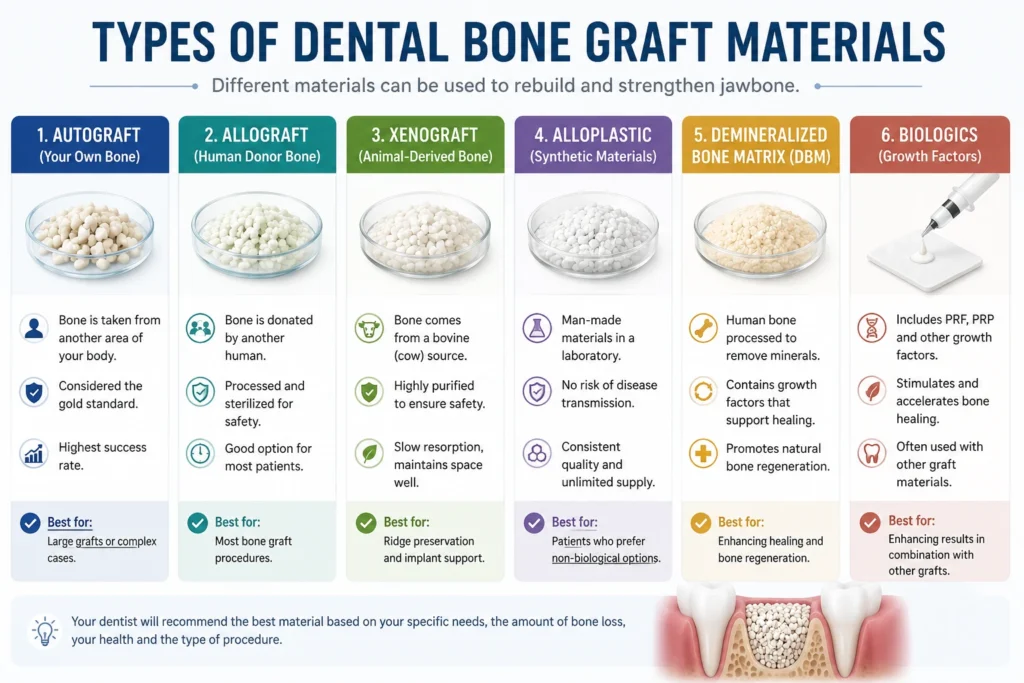
Each material has its own advantages, limitations, and clinical applications. Your dentist or oral surgeon will recommend the most appropriate option based on your individual needs and the procedure being performed.
How is a Dental Bone Graft Placed?
Although the exact technique varies depending on the type of bone graft being performed, most dental bone graft procedures follow the same general steps.
First, your dentist or oral surgeon numbs the treatment area with a local anesthetic. If needed, sedation may also be offered to help you feel more comfortable during the procedure.
Once the area is prepared, the bone graft material is placed where additional bone support is needed. In some cases, a protective membrane is used to help stabilize the graft and encourage bone regeneration before the site is closed with stitches.
After the procedure, the graft gradually integrates with the surrounding jawbone as your body heals. The time required for this process varies depending on the size of the graft, the material used, and your individual healing response.
Most dental bone grafts are completed in a single outpatient visit, allowing you to return home the same day with instructions for recovery and follow-up care.
Healing After a Dental Bone Graft
Healing after a dental bone graft is a gradual process that occurs in two stages. The gums usually heal first over the course of a few weeks, while the underlying jawbone continues to regenerate and strengthen over several months. The exact timeline depends on the type of graft, the amount of bone placed, your overall health, and whether the graft was performed alongside another procedure, such as a tooth extraction or dental implant.
During the first few days, it’s normal to experience mild swelling, discomfort, and minor bleeding. As healing progresses, these symptoms should gradually improve. While the gums may appear healed relatively quickly, the bone beneath continues to mature long after the soft tissues have recovered.
Following your dentist’s post-operative instructions, maintaining good oral hygiene, and attending your follow-up appointments all help promote successful healing.
What Is the Success Rate of a Dental Bone Graft?
Dental bone grafting is a highly predictable procedure with a high success rate when performed on appropriate candidates. Although success varies depending on the type of graft, the surgical technique, and the patient’s overall health, studies have consistently shown success rates of over 90%, with many reporting rates above 95% for routine dental bone grafting procedures. A comprehensive review published in the Journal of Functional Biomaterials concluded that modern bone grafting techniques are generally safe and effective for alveolar ridge preservation and augmentation before implant therapy. (Read the review on PubMed)
Several factors can influence the success of a bone graft, including:
- The type and size of the bone graft
- The location of the graft
- Your overall health and medical conditions
- Smoking or tobacco use
- Good oral hygiene and post-operative care
- The experience of the treating clinician
While most bone grafts heal successfully, no procedure can guarantee a 100% success rate. In some cases, the graft may not integrate as expected or additional grafting may be required before treatment can continue.
The best way to improve the likelihood of a successful outcome is to carefully follow your dentist’s post-operative instructions, avoid smoking, maintain good oral hygiene, and attend all scheduled follow-up appointments.
What Are the Risks and Potential Complications of a Dental Bone Graft?
Dental bone grafting is considered a safe and predictable procedure, and serious complications are uncommon. Like any surgical treatment, however, there are potential risks that patients should be aware of before undergoing the procedure.
Common short-term side effects include mild pain, swelling, bruising, and minor bleeding, all of which are a normal part of the healing process and usually improve within a few days.
Less common complications may include:
- Infection at the surgical site
- Failure of the graft to integrate with the surrounding bone
- Excessive bleeding or delayed healing
- Damage to nearby teeth, nerves, or sinus structures (depending on the treatment area)
- Loss of a small amount of graft material during healing
The risk of complications can often be reduced by following your dentist’s post-operative instructions, maintaining good oral hygiene, avoiding smoking, and attending scheduled follow-up appointments.
Although these complications are uncommon, it’s important to contact your dentist if you experience worsening pain, persistent swelling, fever, pus, excessive bleeding, or any other symptoms that concern you.
For a detailed guide on recognizing the signs of infection and knowing when to seek professional care, read Dental Bone Graft Infection: Signs and Symptoms.
How Much Does a Dental Bone Graft Cost?
The cost of a dental bone graft varies depending on the type of graft, the amount of bone needed, the complexity of the procedure, your location, and the experience of the treating dentist or oral surgeon. Additional treatments, such as tooth extraction, a sinus lift, or dental implant placement, may also affect the total cost.
For a fuller breakdown of implant-related fees and treatment variables, read Why Are Dental Implants So Expensive?
Because every case is different, it’s difficult to provide an exact price without a clinical examination and dental imaging. Your dentist will provide a personalized treatment plan and cost estimate after evaluating your oral health and treatment needs.
In some cases, dental insurance may cover part of the cost if the bone graft is considered medically necessary. However, coverage varies between insurance providers and plans, particularly when the graft is performed as part of dental implant treatment.
Before proceeding, ask your dental office for a detailed treatment estimate and check with your insurance provider to understand what costs, if any, are covered.
Frequently Asked Questions
Is a dental bone graft painful?
A dental bone graft is performed under local anesthesia, so you shouldn’t feel pain during the procedure. Mild to moderate discomfort, swelling, and soreness are common afterward but are usually well managed with prescribed or over-the-counter pain medication.
How long does a dental bone graft take to heal?
The gums generally heal within a few weeks, while the underlying bone continues to regenerate for several months. The exact healing time depends on the type of graft, the amount of bone placed, and your individual healing response. Learn more in our Dental Bone Graft Healing Timeline guide.
Can a dental bone graft fail?
Although dental bone grafting has a high success rate, failure is possible. Smoking, infection, poor oral hygiene, certain medical conditions, and inadequate bone healing can increase the risk. Your dentist will monitor your healing during follow-up visits to ensure the graft is integrating properly.
Is a bone graft always required before a dental implant?
No. Many patients have enough healthy jawbone to support a dental implant without additional grafting. A bone graft is only recommended when there isn’t enough bone to provide long-term implant stability.
Can I eat normally after a dental bone graft?
You’ll usually need to eat soft foods for the first few days after surgery and avoid chewing directly over the graft site. Your dentist will provide detailed dietary instructions based on your procedure and healing progress.
How long does a dental bone graft procedure take?
Most dental bone graft procedures are completed in 30 to 90 minutes, although more complex cases may take longer. The exact duration depends on the type of graft, the amount of bone required, and whether additional procedures are performed at the same appointment.
Related Bone Graft Guides
- Dental Bone Graft Healing Stages: What to Expect from Day 1 to Month 6
- What to Do If Bone Graft Material Comes Out With the Stitches
- Is My Dental Bone Graft Falling Out? What Is the White Stuff?
- Dental Bone Graft Infection Signs: What Is Normal and What Is Not?
- How Long After a Bone Graft Can You Get a Dental Implant?
- Sinus Lift Under Local Anesthesia: Pain, Pressure, Recovery, and Anxiety Tips
Medical Disclaimer
This article is for general education only and is not a substitute for diagnosis, treatment, or personal advice from your dentist or oral surgeon. If you have severe pain, swelling, fever, pus, heavy bleeding, difficulty breathing, or symptoms that are getting worse, seek professional dental or medical care.
AI Content Disclaimer
Some content on The Calm Dentist may be created or improved with the assistance of artificial intelligence tools. AI may be used to help with drafting, editing, formatting, summarizing, or improving readability.
All dental and health-related content is reviewed for accuracy, clarity, and patient safety before publication by Dr. Mehmood Asghar (PhD). However, the information on this website is for general educational purposes only and should not be used as a substitute for professional dental diagnosis, treatment, or personalized advice from a qualified dentist or oral surgeon.