
Written by Dr. Mehmood Asghar, BDS, MPhil, PhD. Editorial update: October 14, 2026. Previous clinical review: August 2, 2026. Editorial standards.
Quick answer: could my bone graft be infected?
Pus, increasing swelling, severe or worsening pain, and fever warrant a call to your dentist or oral surgeon. A persistent foul taste or smell is more concerning when it accompanies these changes. Mild early soreness or a few loose granules alone do not establish infection. The direction of recovery matters: if symptoms return or worsen after improvement, they need assessment.
When to seek help
Seek Emergency care in case of: difficulty breathing or swallowing, or substantial swelling in the mouth or neck. Go to an emergency department or call your local emergency number. NHS guidance on severe dental infection.
Contact your treating dentist promptly: pus, fever, increasing swelling, severe pain, wound opening, or substantial graft loss. Heavy bleeding that does not settle also needs urgent assessment. You do not need every symptom before seeking help.
A photograph or the colour of the wound cannot confirm infection. Follow the postoperative instructions for your own procedure.
On this page
- Possible infection signs and other complications
- Infection versus graft failure
- Appearance, taste and discomfort
- Assessment and next steps
- Treatment and home care
- Further questions
Normal Healing vs Possible Infection After a Dental Bone Graft
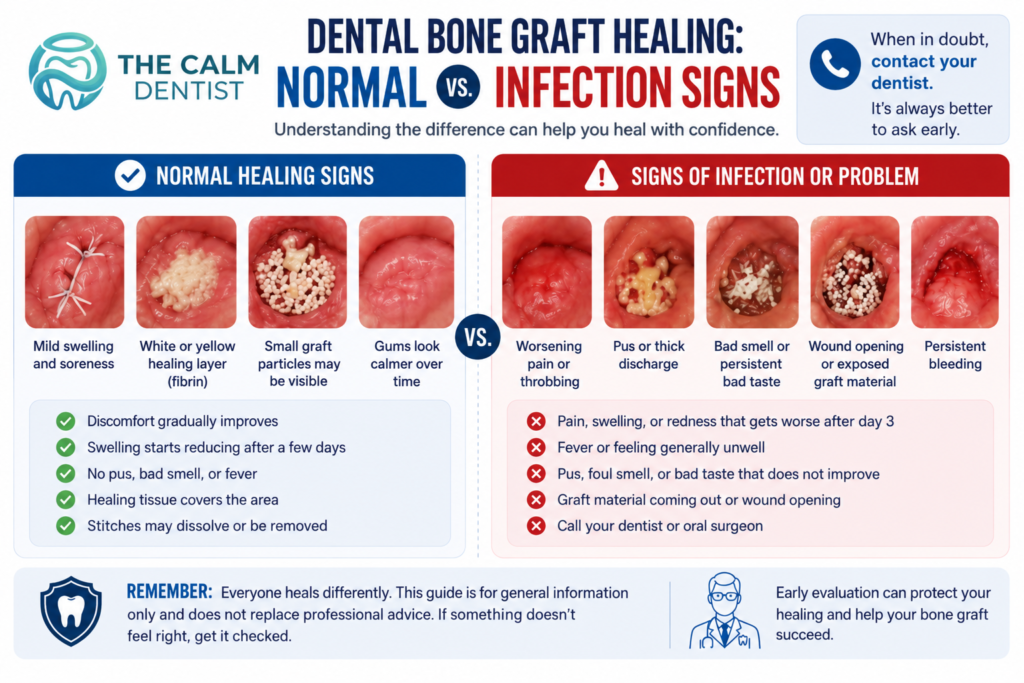
The table below can help you separate common healing changes from symptoms that need professional review.
| Symptom | Often Normal | Possible Infection or Problem |
|---|---|---|
| Pain | Mild to moderate soreness that improves gradually | Pain that becomes severe, throbbing, or worse after a few days |
| Swelling | Mild swelling during early healing | Swelling that worsens rather than settles, especially after initial improvement |
| White material | Thin white/yellow healing layer, fibrin, membrane, or graft material | White material with pus, fever, bad smell, or worsening pain |
| Bleeding | Light bleeding or blood-tinged saliva early on | Heavy bleeding or bleeding that does not slow with pressure |
| Taste | Mild unusual taste from healing tissue, blood, or rinses | Persistent foul taste with swelling, pus, or pain |
| Graft particles | A few small gritty particles may come out | Large amounts of graft material coming out or wound opening |
| General symptoms | Mild tiredness after surgery | Fever, chills, worsening illness, or swollen glands |
What is normal after a dental bone graft?
Early tenderness, swelling and bruising can occur, and small gritty particles may be shed. Recovery varies with the size and location of the graft; the surface healing of your gums does not mean the underlying bone is ready for an implant. Use the comparison above as a guide, not a diagnosis. For the recovery timeline, see dental bone graft healing stages.
Dental bone graft infection signs
Possible signs of infection
- Pus or thick drainage: arrange a review rather than trying to squeeze or clean out the wound.
- Increasing pain or swelling: deterioration after initial improvement is especially concerning.
- Fever or feeling unwell: tell your dentist your temperature and when symptoms started.
- Persistent foul taste or smell: this is not diagnostic by itself, but should be assessed when accompanied by pain, swelling or discharge.
Cleveland Clinic’s graft-specific guidance advises contacting your provider for severe pain, increased swelling, pus or fever of 38.3°C (101°F) or higher. Do not wait to reach a temperature threshold if other symptoms are concerning.
Other complications that need dental review
Wound opening, an exposed membrane or graft, large amounts of lost graft material, and persistent bleeding need assessment, but do not prove infection. Tell your surgeon what has changed rather than trying to label it as rejection. Breathing or swallowing problems belong in the emergency category above.
Is It Infection, Graft Failure, or “Rejection”?
If you searched for bone graft rejection symptoms, the symptoms alone cannot tell you why healing has changed. Infection and failure are different concerns: an infection may affect healing, while a graft can fail to form enough bone without obvious pus or a dramatic change in appearance. Your treating clinician needs to assess the site and its progress.
Patients often use the words infection, failure, and rejection to describe the same worry: “Something does not feel right after my bone graft.” However, these terms do not always mean the same thing.
| Concern | What It Means | Possible Signs |
|---|---|---|
| Infection | Bacteria may be affecting the surgical site. | Pus, worsening pain, swelling, fever, bad smell, or persistent bad taste. |
| Graft failure | The graft may not be integrating or healing as expected. | Wound opening, graft exposure, large graft loss, delayed healing, or insufficient bone formation. |
| “Rejection” | This is a common patient term, but true “rejection” is not the usual way dental bone graft problems are described. | Symptoms may overlap with infection, poor healing, wound opening, or graft failure. |
Most dental bone graft problems are not true “body rejection” in the same way people think of organ rejection. More commonly, the issue may involve infection, poor blood supply, wound opening, graft movement, smoking, uncontrolled medical conditions, or inadequate healing.
What Should a Dental Bone Graft Look Like After 2 Weeks?
By around two weeks, many patients notice that the gum tissue looks calmer than it did immediately after surgery. The surface may look pink, pale, white-yellow, or slightly uneven. Stitches may still be present, or they may have already dissolved or been removed depending on the type used.
At around two weeks, these findings may be part of normal healing:
- Reduced swelling compared with the first few days
- Less soreness than the first week
- A white or yellowish healing layer
- Mild tenderness around the surgical site
- Some uneven gum texture
- Small surface graft particles
However, the graft site should not be getting more painful, more swollen, or more foul-smelling at this stage. Contact your dentist if you notice pus, increasing pain, worsening swelling, fever, wound opening, exposed graft material, or a large amount of graft particles coming out.
Is bad taste after a dental bone graft normal?
Blood, prescribed rinses and food debris can alter taste after surgery. A persistent foul taste deserves attention, especially alongside pain, swelling or drainage. Taste alone cannot identify the cause; tell your dentist whether it is improving or becoming more noticeable.
White Stuff After a Bone Graft: Healing Tissue, Graft Material, or Pus?
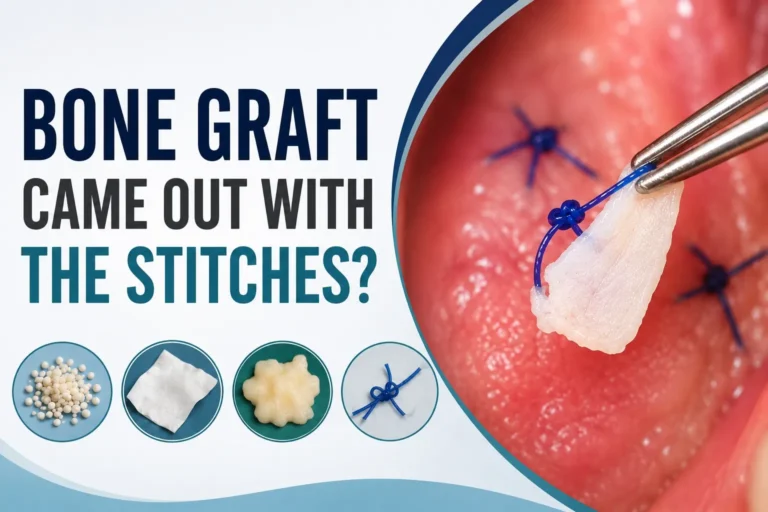
White material after a dental bone graft can be confusing. It is not automatically a sign of infection.
Possible explanations include:
- Fibrin: a normal white or yellowish healing layer
- Healing tissue: tissue forming over the wound
- Graft particles: small white granules near the surface
- Membrane: a protective material placed by the dentist
- Food debris: trapped around the surgical site
- Pus: thicker discharge that may suggest infection
The key question is not simply “Is it white?” The key question is whether the white material is associated with worsening pain, swelling, pus, fever, bad smell, or a bad taste.
For a focused explanation, read our guide on white stuff after a dental bone graft.
Swelling and pain: look at the pattern
Compare today with the previous day, rather than judging one moment in isolation. Early discomfort can occur during healing, but a new increase after improvement should prompt contact with your treating clinician. Severe pain or spreading swelling should not be dismissed because surgery was recent.
What Increases the Risk of Infection After a Dental Bone Graft?
Infection risk varies from person to person. Some factors can make healing more difficult or increase the chance of post-surgical complications.
| Risk Factor | Why It May Matter | What To Do |
|---|---|---|
| Smoking or vaping | Can reduce blood supply and slow healing | Follow your dentist’s instructions about avoiding tobacco or nicotine. |
| Poor oral hygiene | More bacteria around the surgical site may increase infection risk | Keep the mouth clean without disturbing the graft site. |
| Uncontrolled diabetes | Can slow wound healing and affect infection control | Discuss blood sugar control with your dentist or physician. |
| Active infection before surgery | Existing bacteria may complicate healing | Your dentist may treat infection before or during graft planning. |
| Disturbing the graft site | Touching, poking, suction, or hard foods can disrupt healing | Avoid straws, hard foods, and direct trauma if instructed. |
| Missed follow-up visits | Problems may go unnoticed | Attend scheduled post-operative checks. |
If your bone graft was placed before a dental implant, infection or delayed healing may also affect implant timing. Our article on how long after a bone graft you can get a dental implant explains how graft maturity affects the next stage of treatment.
What Should You Do If You Suspect a Bone Graft Infection?
If you think your bone graft may be infected, do not try to diagnose it yourself or aggressively clean the wound. Contact your dentist or oral surgeon and describe your symptoms clearly.
Useful details to tell your dentist include:
- When the graft was done
- Whether pain is improving or worsening
- Whether swelling is increasing
- Whether you see pus or discharge
- Whether you have fever or feel unwell
- Whether the wound has opened
- Whether a large amount of graft material has come out
- Whether you are taking prescribed medicines as directed
Your dentist may examine the area, clean the site if needed, take X-rays, prescribe medication when appropriate, or adjust your aftercare instructions. The exact treatment depends on what is causing the symptoms.
Do not start leftover antibiotics, stop prescribed medication, or repeatedly poke the graft site without professional advice.
Can Antibiotics, Mouthwash, or Home Care Fix a Bone Graft Infection?
Do not try to treat a suspected dental bone graft infection on your own. Mouthwash, salt-water rinses, and careful oral hygiene may help support healing when your dentist recommends them, but they cannot reliably diagnose or treat a true infection.
Antibiotics may be prescribed in some cases, but they are not always enough by themselves. Depending on the problem, your dentist or oral surgeon may need to examine the graft, clean the area, drain infection, take an X-ray, adjust medication, or reassess whether the graft is still stable.
You should avoid:
- Taking leftover antibiotics without dental advice
- Stopping prescribed antibiotics early unless your dentist tells you to
- Poking or scraping the graft site
- Using strong antiseptics that were not prescribed
- Trying to remove white tissue, graft particles, or membranes yourself
If your dentist prescribed a rinse such as chlorhexidine or gave specific cleaning instructions, follow those instructions exactly. If symptoms are worsening despite home care, contact your dentist or oral surgeon instead of waiting.
Can Infection Delay Dental Implant Placement?
Yes. If the graft was placed to prepare for a dental implant, infection or delayed healing can postpone the implant stage.
A dental implant needs enough healthy, stable bone. If infection affects the grafted area, your dentist may need to wait longer, treat the infection first, or reassess the bone before placing the implant.
If the white tissue is around an existing implant rather than a bone-graft site, see our separate guide to what white tissue around a dental implant may mean.
Mayo Clinic explains that infection is one of the risks of dental implant surgery. This is one reason implant planning should include careful assessment of oral health, bone quality, and healing. Read more here: Mayo Clinic: Dental Implant Surgery.
If your main concern is implant timing after grafting, read: How Long After a Bone Graft Can You Get a Dental Implant?
Further questions
What antibiotics are used for a dental bone graft infection?
The right antibiotic depends on your symptoms, medical history, allergy history, local prescribing guidelines, and the dentist’s clinical assessment. Do not self-medicate with leftover antibiotics. A suspected graft infection should be assessed professionally.
Can an infected bone graft still heal?
Sometimes healing can continue after the problem is treated early. In other cases, infection may compromise the graft and delay implant placement. Your dentist will assess the site clinically and may use imaging if needed.
Related Guides on The Calm Dentist
- Dental Bone Graft Guide: Healing, Recovery, Warning Signs, and Implant Timeline
- Dental Bone Graft Healing Stages: What to Expect from Day 1 to Month 6
- Loose bone graft particles, membranes and white material
- How Long After a Bone Graft Can You Get a Dental Implant?
- Sinus Lift Under Local Anesthesia: Pain, Pressure, Recovery, and Anxiety Tips
External Resources
- Cleveland Clinic: Dental Bone Graft
- Mayo Clinic: Dental Implant Surgery
- MedlinePlus: Tooth Abscess
- MouthHealthy: Abscess
Medical Disclaimer
This article is for general educational purposes only and is not a substitute for diagnosis, treatment, or personalized advice from your dentist, oral surgeon, or physician. If you have severe pain, swelling, fever, pus, heavy bleeding, difficulty breathing or swallowing, or symptoms that are getting worse, seek professional dental or medical care.
AI Content Disclaimer
This article may have been drafted or edited with the assistance of AI tools. This editorial update used AI assistance; it does not represent a new independent clinical review. This information is educational only and is not a substitute for professional dental advice, diagnosis, or treatment.
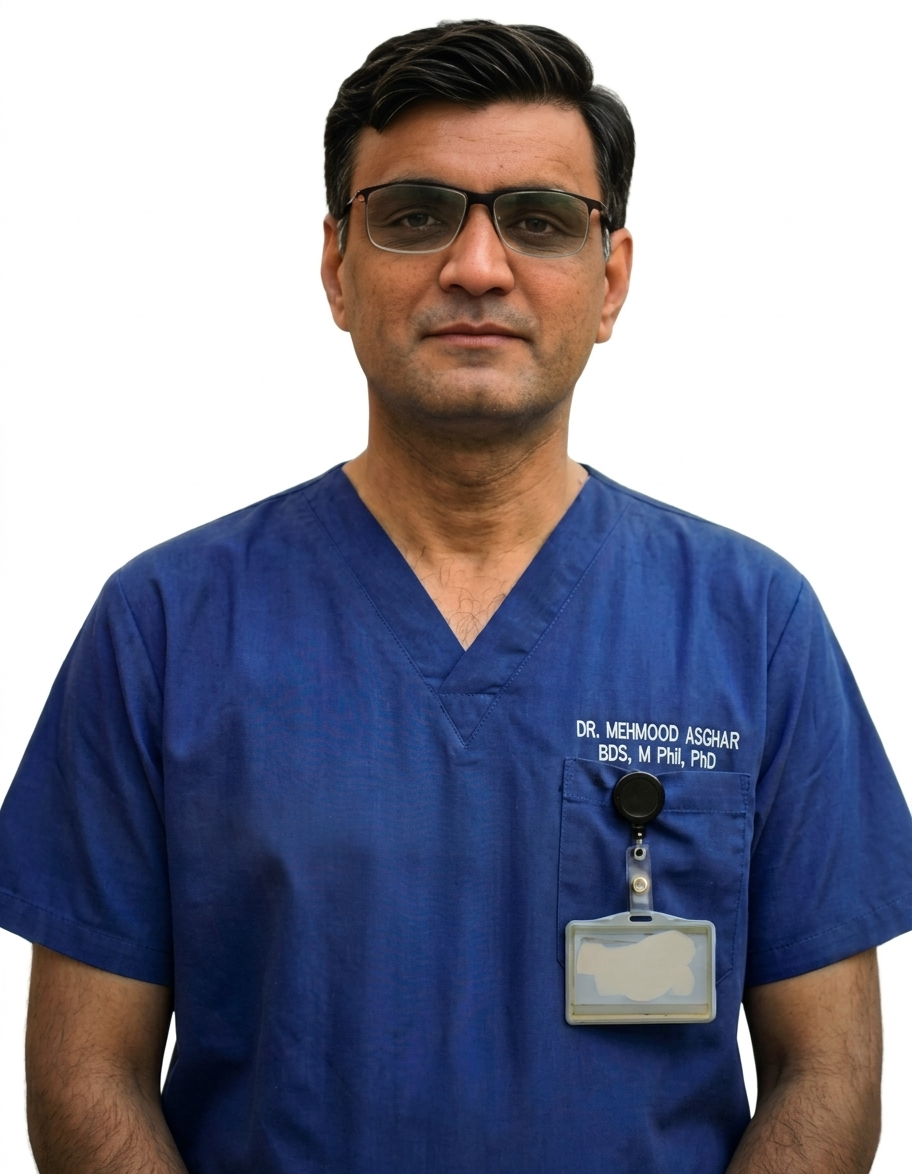
Dr. Mehmood Asghar is a Dentist and an Assistant Professor of Dental Materials, with nearly a decade of clinical experience. He holds a Ph.D. in Dental Biomaterials from Universiti Malaya and a Bachelor of Dental Surgery (BDS) from NUST. As a dedicated researcher with over 25 peer-reviewed publications and more than 310 citations in international journals, Dr. Asghar bridges the gap between clinical dentistry and advanced biomaterials research to provide patients with evidence-based, practical dental advice.
Discover more from The Calm Dentist Blog
Subscribe to get the latest posts sent to your email.