Written and clinically reviewed by Dr. Mehmood Asghar, BDS, MPhil, PhD. Last reviewed: October 26, 2026. See our editorial standards.
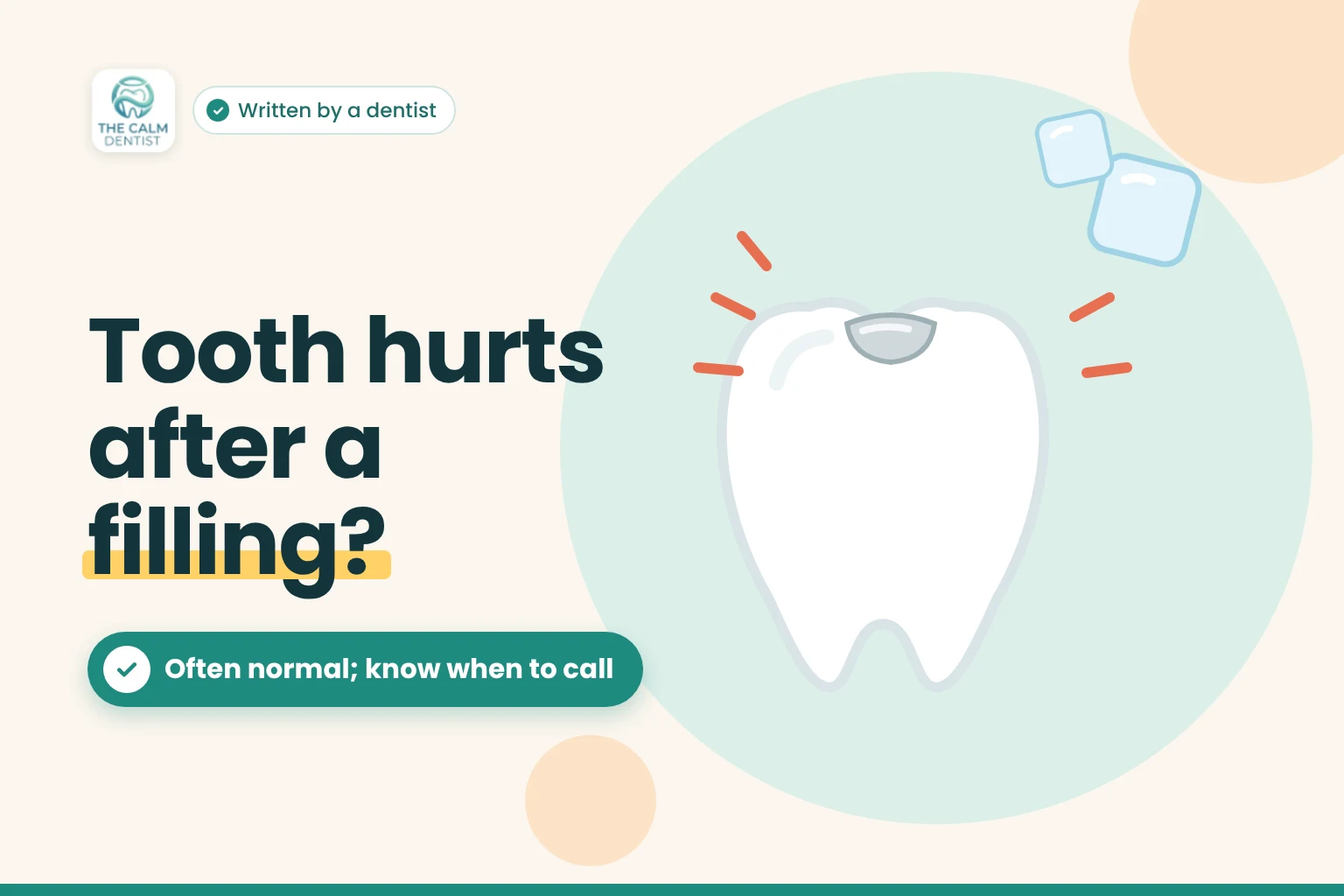
Tooth pain after a filling? Your filling is done, the numbness has worn off, and now the tooth twinges when you drink something cold. Or it aches a little in the evening. If you are an anxious patient, it is easy to start wondering whether something went wrong.
Most of the time, some sensitivity after a filling is a normal part of the tooth settling down. This guide explains what is usually normal, what is not, why it happens, and when to call your dentist.
Is tooth pain after a filling normal?
Yes, usually. A tooth that feels a little sore, or sensitive to cold, air or sweet foods, and slight gum soreness around it, are common after a filling. Cleveland Clinic describes these as temporary effects that should go away in a week or two (Cleveland Clinic: dental fillings).
The key sign is direction. Sensitivity that is getting a little better each day is usually reassuring. Pain that is getting worse, keeps you awake, throbs on its own or lingers for more than about 30 seconds after something hot or cold needs a dental check.
How long should a tooth hurt after a filling?
For most people, sensitivity is strongest in the first few days and fades over one to two weeks. After a deep filling it can take a little longer. The American Association of Endodontists advises giving sensitivity after dental work two to four weeks to settle, and seeing your dentist if it persists or gets worse (AAE: tooth pain).
You do not need to wait the full four weeks if the pain is getting worse, if it hurts to bite, or if hot or cold sets off pain that lingers. Those are reasons to call sooner.
What is usually normal, and what is not
| What you notice | Usually normal? | What to do |
|---|---|---|
| Short zing with cold drinks, cold air or sweets that fades in seconds | Yes, often in the first days to weeks | Give it time; see the tips below |
| A slightly sore tooth or gum next to the filling | Yes, usually settles within days | Keep the area clean and brush gently |
| Sensitivity that is slowly improving | Yes | Keep monitoring |
| Pain when you bite down or the tooth feels “high” | Not something to wait out | Call your dentist; the bite may need a small adjustment |
| Sensitivity still there after about 4 weeks | Needs a check | Book a review |
| Pain that lingers more than about 30 seconds after hot or cold | No | Call your dentist |
| Throbbing pain that starts on its own or wakes you at night | No | Call your dentist promptly |
| Swelling of the face or jaw, fever, or pain not helped by painkillers | No | Contact your dentist straight away or seek urgent care |
Why is my tooth sensitive after a filling?
A filling repairs the tooth, but the inner part of the tooth (the nerve, or pulp) can still react for a while. Common reasons include:
- The cavity was deep. The closer the decay was to the nerve, the more likely the tooth is to feel sensitive afterwards while the nerve settles.
- The tooth has just been worked on. Removing decay and preparing the tooth can irritate it for a short time, even when everything went well.
- The filling is slightly high. If the new filling touches first when you close, the pressure can make the tooth sore. If your bite still feels weird, ask your dentist whether it needs a small adjustment.
- Gum irritation. The gum next to the tooth can be a little sore from the treatment itself.
Tooth sensitive to cold after a filling
Cold sensitivity is the most common complaint after a filling. A short, sharp twinge that disappears within a few seconds of the cold being removed usually means the nerve is still settling. It typically eases gradually over the following days and weeks.
The pattern that matters is how long the pain lasts. If cold or heat sets off an ache that lingers for more than about 30 seconds after the drink is gone, the American Association of Endodontists and Cleveland Clinic both describe this as a possible sign that the nerve is not healthy, so your dentist should check the tooth.
Does it hurt when you bite down?
Pain when biting is different from temperature sensitivity. It often means the filling is slightly too high and is taking more pressure than the other teeth. This is usually easy to fix with a quick adjustment, so it is better to call than to wait. Read more in my guide: Bite feels weird after a filling or crown? Normal vs too high.
Why does my filling hurt months later?
Tooth pain after a filling that starts weeks or months later, when the tooth had been comfortable, is not part of normal healing. It is worth getting checked because the cause is usually something your dentist can find and treat. Possible reasons include:
- New decay around the filling. Decay can start again at the edge of an older filling.
- A crack in the tooth or filling. This often causes a sharp pain when biting on something, especially when you release the bite.
- The nerve becoming inflamed or infected. When the original decay was very deep, the nerve may not recover. Cleveland Clinic notes that a throbbing toothache can mean decay reached the pulp.
- Clenching or grinding. Heavy forces at night can make a filled tooth sore.
- A worn, loose or broken filling. Cleveland Clinic advises calling your dentist if a filling breaks.
How to relieve tooth pain after a filling
If the sensitivity is mild and improving, these simple steps can make the waiting period more comfortable:
- Use a toothpaste for sensitive teeth. Cleveland Clinic suggests desensitizing toothpaste, and you can also dab a little on the tooth before bed. It may take repeated use before you notice a difference.
- Avoid very hot, very cold and very sweet foods for a while, or drink through the other side of your mouth.
- Brush gently with a soft brush and keep cleaning the area. Do not avoid it.
- Use an over-the-counter painkiller if needed, such as acetaminophen (Tylenol) or ibuprofen, following the label and any advice from your pharmacist or doctor.
- Try not to keep testing the tooth with cold water or by tapping it. Constant checking can keep your attention locked on the tooth and make it feel worse.
When to worry: call your dentist if…
- The pain is getting worse instead of better
- Sensitivity has not settled after about 4 weeks
- It hurts to bite down, or the tooth feels high
- Hot or cold pain lingers for more than about 30 seconds
- The tooth throbs on its own or wakes you at night
- The filling feels rough, cracked, loose or has fallen out
Get help straight away if you have severe pain that painkillers do not control, swelling of your face or jaw, fever or chills, or any difficulty swallowing or breathing.
What your dentist may do
Knowing what to expect can make the appointment less worrying. Depending on what they find, your dentist may:
- Check your bite and smooth a high spot on the filling, which usually takes only a few minutes
- Test how the tooth responds to cold or tapping, and take an X-ray
- Apply a desensitizing treatment or fluoride varnish
- Repair or replace the filling
- Recommend root canal treatment if the nerve is not recovering; this is done under local anesthetic and aims to save the tooth
If you feel nervous about going back, tell the dental team when you book. Saying “I’m anxious and would like you to explain each step” is a completely reasonable request. If numbness is part of what worries you, see how long dental numbing lasts.
FAQs
Why is my tooth still sensitive weeks after a filling?
Deep fillings can take longer to settle, and mild sensitivity that is slowly improving can still be part of normal healing. If it has not settled within about two to four weeks, is getting worse or lingers after hot or cold, see your dentist to check the nerve, the bite and the filling.
Is it normal for a tooth to ache after a filling?
A mild ache or tenderness for a few days can happen, especially after a deep filling. A strong, throbbing or worsening ache is not normal and should be checked.
Why does my tooth hurt more after the filling than before?
Treatment can irritate the nerve for a while, so a tooth that felt fine before can feel sensitive afterwards. This usually improves. If it keeps getting worse, the nerve may have been affected by deep decay, and your dentist should check it.
Can a filling hurt years later?
Yes. Older fillings can wear, crack or develop decay around their edges, and the tooth underneath can develop problems. New pain in an old filling is a reason for a check-up, not a reason to panic.
Will I need a root canal if my filling hurts?
Most sensitivity after a filling settles without further treatment. Root canal treatment is only considered if the nerve is not recovering, for example with lingering or throbbing pain.
Final thoughts
Some tooth pain after a filling, usually mild sensitivity, is common and fades as the tooth settles. Watch the direction: improving is reassuring, worsening needs a call. Pain when biting usually means a quick adjustment, and pain that lingers, throbs or appears months later deserves a check. In every case, your dentist can help, and asking for a calm, step-by-step appointment is always okay.
Medical Disclaimer: This article is for general educational purposes only and is not a substitute for diagnosis or treatment from your own dentist, physician, or qualified healthcare professional. If you have severe pain, swelling, fever, trauma, pus, difficulty opening your mouth, or symptoms that are getting worse, seek professional care promptly.

Dr. Mehmood Asghar, BDS, MPhil, PhD, is a dentist and Assistant Professor of Dental Materials at Army Medical College, National University of Medical Sciences (NUMS), Pakistan. He holds a BDS from NUST and a PhD from Universiti Malaya. His clinical, teaching and research background helps him explain dental treatments, recovery and oral health evidence in clear, practical language for patients. He writes and clinically reviews the guides at The Calm Dentist.