Written and clinically reviewed by Dr. Mehmood Asghar, BDS, MPhil, PhD. Last reviewed: October 19, 2026. See our editorial standards.
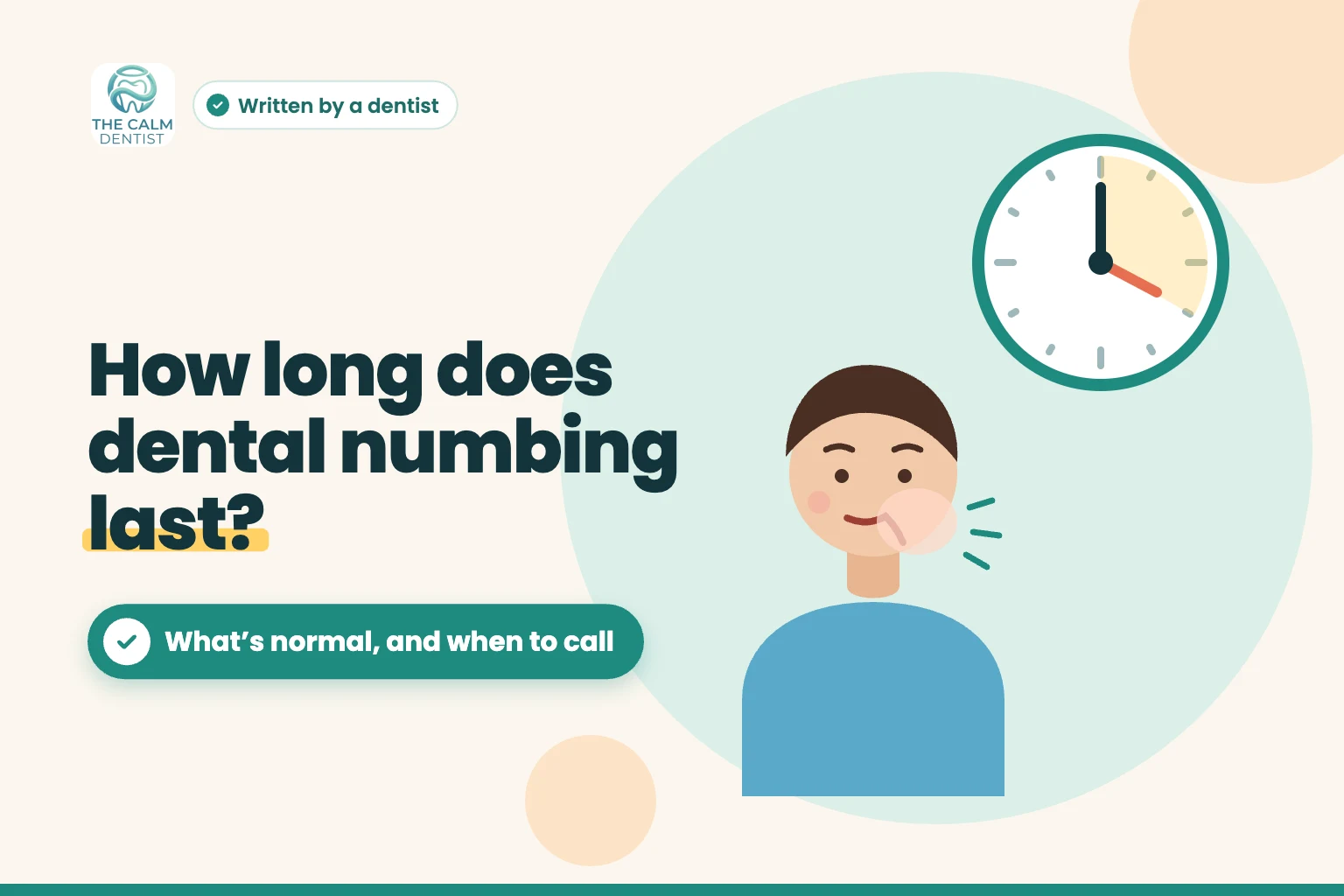
How long does dental numbing last? It depends on the anesthetic and the injection, but most people feel normal within a few hours.
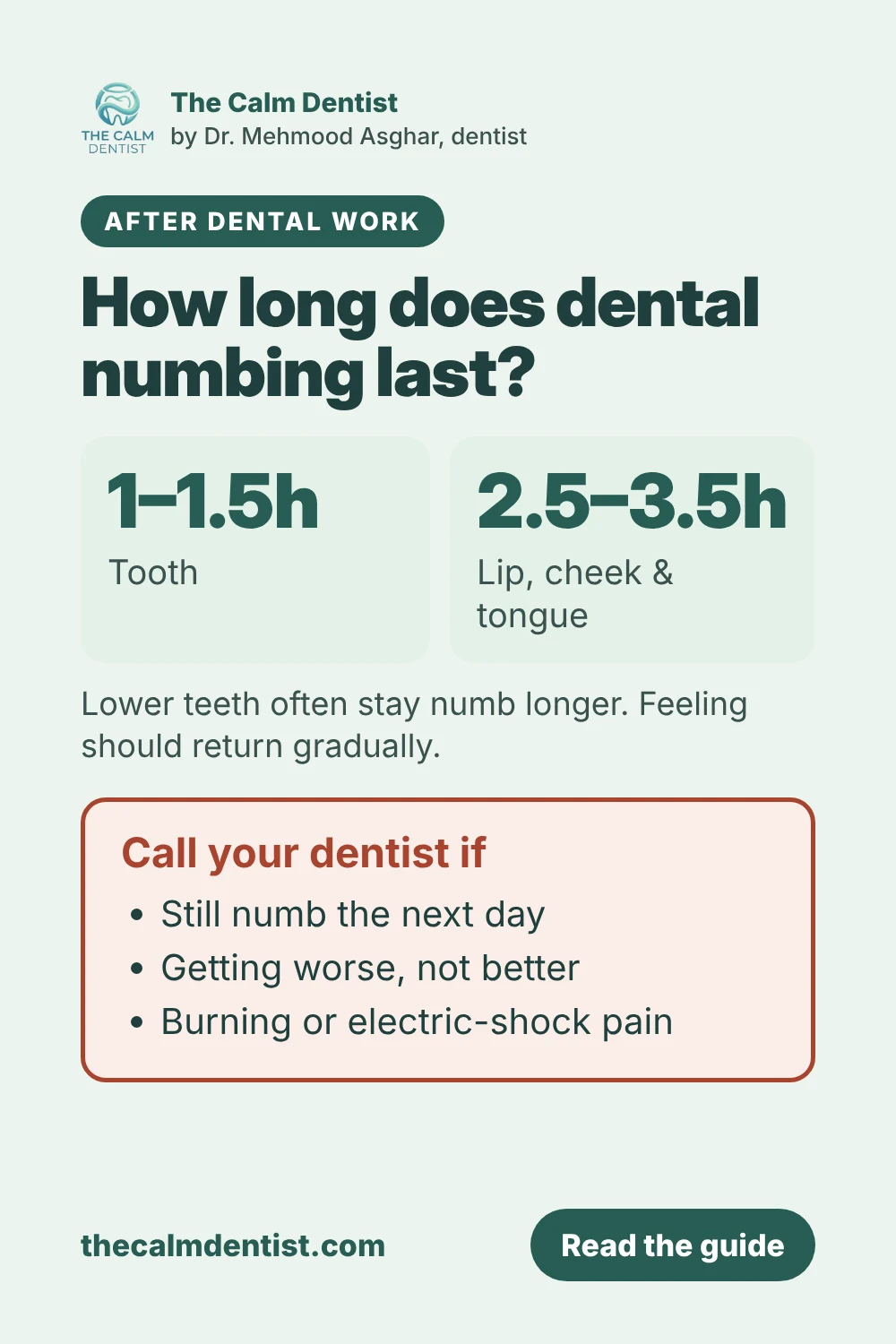
With one of the most common dental anesthetics, 2% lidocaine with epinephrine, your tooth is usually numb for about 1 to 1.5 hours, while your lip, cheek or tongue stays numb for roughly 2.5 to 3.5 hours. Lower-jaw injections tend to last longer than upper-jaw ones. Other anesthetics, extra injections and longer procedures can change this, so your dentist’s estimate comes first.
“Novocaine” is the name most people use, but Novocain was a brand of procaine, an older drug dentists rarely use today. Most now use lidocaine, articaine, mepivacaine or prilocaine.
How Long Does Dental Numbing Last? The Usual Timeline
It helps to separate two effects:
- Tooth (pulpal) numbness blocks the nerve inside the tooth so treatment is comfortable.
- Soft-tissue numbness affects the lip, cheek, tongue and nearby gum.
Soft-tissue numbness outlasts tooth numbness, which is why your lip can still feel heavy long after the dentist has finished.
The prescribing information for Xylocaine Dental (2% lidocaine with epinephrine) reports these averages:
| Injection technique | Tooth numbness | Lip, cheek or tongue numbness |
|---|---|---|
| Infiltration near the tooth | At least about 60 minutes | About 2.5 hours |
| Nerve block | At least about 90 minutes | About 3–3.5 hours |
These are averages, not deadlines.
How Long Does Novocaine Last After Dental Work?
Because “Novocaine” is now a nickname, the real answer depends on which drug you received:
- Lidocaine or articaine with epinephrine: the timeline above, roughly 2.5–3.5 hours of lip and tongue numbness.
- Plain mepivacaine or prilocaine (no epinephrine): shorter-acting; numbness often fades sooner.
- Bupivacaine: a long-acting option sometimes used for oral surgery. Its label states it can last two to three times longer than lidocaine in dental use, so lip numbness may continue for much of the day.
If you’re unsure what was used, it’s fine to call the office and ask.
Why Lower Teeth Stay Numb Longer Than Upper Teeth
Upper and lower teeth are usually numbed differently.
- Upper teeth are typically numbed with an infiltration, an injection placed near the tooth. Numbness stays fairly local and usually fades sooner.
- Lower back teeth usually need an inferior alveolar nerve block, an injection further back in the jaw. It numbs the lower lip, chin and often half of the tongue on that side, and it tends to last longer.
This is why your tongue or chin can be numb even though the dentist only worked on one tooth. Different areas also recover at different speeds: tingling in the lip may return before the tongue feels normal. Uneven recovery is expected; what matters is that feeling is steadily returning.
How Long Numbness Lasts After Different Dental Procedures
The drug and injection technique matter more than the procedure name.
| Procedure | What usually decides the numbness |
|---|---|
| Upper filling or crown | Usually an infiltration; lip or cheek may stay numb after the tooth wakes up |
| Lower molar filling, crown or root canal | Usually a nerve block; lower lip, chin and tongue are often numb for longer |
| Deep cleaning | Depends on the area: topical gel, infiltration or a block |
| Extraction or oral surgery | Several injections or a longer-acting drug may be used; follow surgical aftercare |
If your bite feels odd after a filling or crown, wait until the numbness has fully worn off before judging it. Then see our guide to a bite that feels weird after a filling or crown.
What Affects How Long Dental Anesthesia Lasts?
- The anesthetic chosen, and whether it contains epinephrine, which keeps it in place longer.
- Infiltration vs nerve block.
- Dose and number of injections. Two or three injections don’t simply double or triple the time, but they can extend it.
- Your anatomy, blood flow and individual response. Someone else’s recovery time isn’t a reliable guide to yours.
What Does Numbing Feel Like as It Wears Off?
As feeling returns, you may notice tingling or pins and needles, heaviness that slowly eases, slightly altered speech, mild drooling, or difficulty sensing where your lip or cheek is.
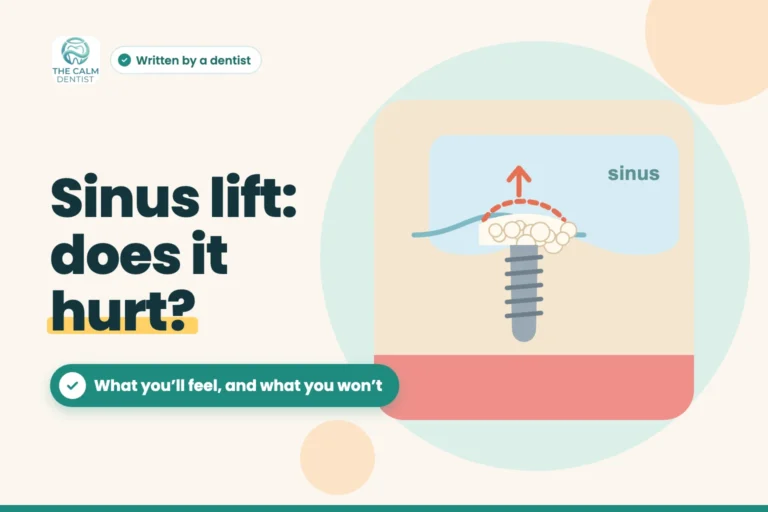
During treatment, local anesthesia blocks sharp pain, but you may still feel pressure, movement or vibration. If you feel sharp pain, tell the dental team; more anesthetic can usually be given. Our guide to a sinus lift under local anesthesia explains the difference between pressure and pain.
Why Your Heart May Race After the Injection
Most dental anesthetics contain a small amount of epinephrine (adrenaline). It keeps the anesthetic in place for longer and reduces bleeding. If a little of it enters a blood vessel, you may feel your heart pounding, a little shaky or flushed for a minute or two.
This can feel alarming, especially if you were already nervous, but it settles on its own and is not an allergic reaction. Breathe slowly and let your dentist know; they can pause until it passes. Before treatment, tell your dentist about any heart condition, high blood pressure, thyroid problem or a past reaction like this, so they can choose the most suitable anesthetic for you.
What If the Numbing Doesn’t Work or Wears Off Too Fast?
Sometimes a tooth doesn’t get fully numb. This is more common with lower back teeth and with teeth that are already inflamed or infected, because inflammation makes the nerve more sensitive and makes the anesthetic work less well. A long appointment can also outlast the first injection.
None of this means something is wrong with you. Tell your dentist as soon as you feel sharp pain. They can wait a few more minutes, give another injection or try a different technique. You never have to “push through” pain in the dental chair.
Can You Make Dental Numbness Wear Off Faster?
No home remedy reliably reverses dental anesthesia. For most people, the answer is time and protecting the numb area.
The one proven option is a reversal injection, phentolamine mesylate (OraVerse), which your dentist gives at the end of the appointment. According to the US prescribing information, it brought back normal lip sensation about 83–85 minutes sooner in adults and about 75 minutes sooner in children aged 6–11.
It works on lip and tongue numbness caused by anesthetics that contain a vasoconstrictor, not on the tooth itself. It’s approved for adults and children, and your dentist will check whether it’s suitable for your child.
Not every office stocks it, so ask before your next appointment if long numbness bothers you. Don’t massage a surgical site, apply heat, or exercise hard to “flush out” the anesthetic unless your dentist says it’s safe for your procedure.
Numb Children: How to Prevent Lip and Cheek Biting
Children often chew or suck a numb lip, cheek or tongue because it feels strange. The American Academy of Pediatric Dentistry describes this self-inflicted biting as a known complication and advises giving caregivers a realistic numbness time and precautions.
Until feeling returns:
- supervise your child and gently remind them not to bite or suck the area;
- offer soft foods only and skip chewing gum;
- keep hot food and drinks away; and
- ask the dentist how long the numbness should last before you leave.
A bite injury often shows up the next day as a swollen, white or yellowish sore. It usually heals on its own, but contact the dentist for a large wound, worsening swelling, bleeding that won’t stop, fever or trouble drinking.
What to Avoid While Your Mouth Is Numb
- Chewing on the numb side
- Very hot food and drinks (you can burn yourself without feeling it)
- Biting, pinching or repeatedly testing the area
- Chewing gum
- Ignoring any procedure-specific instructions
Cleveland Clinic advises against eating on the numb side because you can injure your cheek or gums without noticing. After surgery, follow the aftercare you were given; our bone graft healing guide explains why protecting a surgical site matters.
When to Call Your Dentist or Seek Urgent Help
There’s no single hour at which numbness becomes abnormal. Start with the time your dentist gave you.
| What you notice | What to do |
|---|---|
| Lip, cheek or tongue numb for a few hours, with feeling gradually returning | Normal. Protect the area and wait. |
| Numbness lasting well beyond the expected time, into the next day, getting worse, or with burning pain, electric-shock sensations, altered taste or facial weakness | Call your dental office for advice and assessment. |
| Real difficulty breathing or swallowing, rapidly increasing facial or throat swelling, widespread hives, fainting or a seizure | Seek urgent medical help immediately. |
If you’re unsure which row fits, call the office anyway. Your dental team would rather hear from you.
Long-lasting changes in sensation are uncommon but can happen, most often after lower-jaw nerve blocks, and most improve over time, according to a 2023 review of nerve complications after dental injections. Duration alone can’t diagnose nerve injury, so let your dentist assess it.
How to Feel Calmer While You Wait
- Note the time your dentist expected feeling to return.
- Stop testing the area; constant checking makes numbness feel more intense.
- Pick one check-in time instead of monitoring every few minutes.
- Look for gradual improvement, not an instant switch-off.
- Call the office if the expected time passes.
If your bite still feels “off” once the numbness is gone and you’re worried about it, our guide on whether dental anxiety can make your bite feel wrong may help.
Frequently Asked Questions
Is it normal to be numb five hours after the dentist?
It can be. Five hours is longer than the average for lidocaine, but it can be normal after a long-acting anesthetic such as bupivacaine, several injections or a lower-jaw nerve block. If feeling is slowly returning, give it time. If it’s well past what your dentist told you, or not improving at all, call the office.
Why is my tongue, lip or chin still numb after the dentist?
A lower-jaw nerve block numbs the lower lip, chin and often half the tongue on that side, and these areas are usually the last to wake up, often after the tooth itself. Feeling should return gradually over a few hours. Call if it lasts into the next day or comes with burning, altered taste or weakness.
Can I eat while my mouth is numb?
It’s safest to wait until feeling returns, or to stick to soft, lukewarm food on the other side. You can bite or burn numb tissue without noticing. Surgery may come with extra rules.
How long will my child be numb after a filling?
Usually a few hours, depending on the drug, dose and tooth. Ask the dentist for an expected time and supervise your child until feeling returns to prevent lip or cheek biting.
Can dental numbing make my throat or breathing feel strange?
Yes. A numb tongue or palate can make swallowing feel unfamiliar even though your airway is fine. But real difficulty breathing or swallowing, swelling that’s getting worse, widespread hives or fainting needs urgent medical help. Don’t wait.
What if the numbness lasts until the next day?
Call your dentist. Next-day numbness doesn’t mean permanent damage, but it’s longer than expected after most routine injections and should be checked and documented.
Why did my heart race after the dental injection?
The small amount of adrenaline in most dental anesthetics can make your heart pound or make you feel shaky for a minute or two. It passes on its own and is not an allergy. Tell your dentist so they can pause, and mention any heart condition before treatment.
The Bottom Line
So, how long does dental numbing last? Most dental numbness fades within a few hours, and the lip or tongue often wakes up last. Protect the numb area, look for steady improvement, and call your dentist if it lasts longer than expected or comes with unusual symptoms.
Medical disclaimer: This article provides general educational information and is not a diagnosis or a substitute for care from your dentist, physician or another qualified healthcare professional. Contact your treating clinician for advice about your individual procedure and symptoms.
References
Drug labels and clinical studies
- DailyMed. Xylocaine Dental (lidocaine HCl and epinephrine) prescribing information.
- DailyMed. OraVerse (phentolamine mesylate) prescribing information.
- Hersh EV, et al. Reversal of soft-tissue local anesthesia with phentolamine mesylate in adolescents and adults. J Am Dent Assoc. 2008;139(8):1080–1093.
- DailyMed. Marcaine (bupivacaine HCl and epinephrine) prescribing information. DailyMed label.
Reviews and professional guidance
- National Center for Biotechnology Information. Procaine. StatPearls.
- National Center for Biotechnology Information. Local anesthetic drugs used in dentistry. StatPearls.
- Mathison M, Pepper T. Local anesthesia techniques in dentistry and oral surgery. StatPearls.
- American Academy of Pediatric Dentistry. Use of local anesthesia for pediatric dental patients. Reference Manual of Pediatric Dentistry, 2023.
- Ghafoor H, Haroon S, Atique S, Ul Huda A, Ahmed O, Bel Khair AOM, Abdus Samad A. Neurological complications of local anesthesia in dentistry: a review. Cureus. 2023;15(12):e50790.
- Cleveland Clinic. Local anesthesia.
- American Dental Association, MouthHealthy. Anesthesia and sedation.

Dr. Mehmood Asghar, BDS, MPhil, PhD, is a dentist and Assistant Professor of Dental Materials at Army Medical College, National University of Medical Sciences (NUMS), Pakistan. He holds a BDS from NUST and a PhD from Universiti Malaya. His clinical, teaching and research background helps him explain dental treatments, recovery and oral health evidence in clear, practical language for patients. He writes and clinically reviews the guides at The Calm Dentist.